


Are Afro Hair Transplants Permanent?
Are Afro Hair Transplants Permanent?

Are Afro Hair Transplants Permanent?
The Short Answer: Yes, Afro Hair Transplants Are Permanent
One of the most common questions asked before an afro hair transplant is whether the results will last. It is a reasonable concern – hair loss is progressive, and the idea of investing in surgery only to lose the results over time is understandably worrying.
The good news is that a successful hair transplant delivers permanent results. The transplanted follicles are genetically resistant to the hormone responsible for male pattern baldness and will continue to grow for life. Understanding why this is the case – and what factors influence the long-term quality of your result – gives you a complete and realistic picture of what to expect.
“Permanence is one of the things that distinguishes a hair transplant from every other hair loss solution. Medications need to be taken indefinitely to maintain their effect. Concealers need to be reapplied every day. A well-executed transplant, by contrast, is a one-time procedure that delivers lifelong results. That is a fundamentally different proposition, and it is why so many of our patients say it is the best decision they have made.”
— Darryl King, CEO, Capital Hair Restoration
Why Are Transplanted Hairs Permanent?
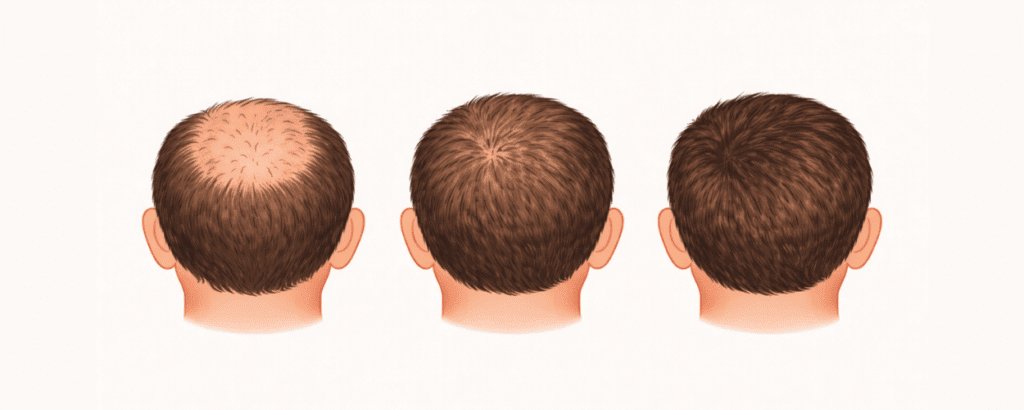
The science behind the permanence of a hair transplant lies in a principle called donor dominance. The follicles used in a hair transplant are taken from the donor area – typically the back and sides of the scalp – which is genetically resistant to DHT, the hormone responsible for male pattern baldness.
When these DHT-resistant follicles are transplanted to a new location – the hairline, crown, or mid-scalp – they retain their genetic programming. They continue to behave as they would in their original location, growing permanently and without miniaturisation, regardless of where on the scalp they have been placed.
This principle has been understood and validated in hair restoration surgery for decades. It is the biological foundation on which the entire field of hair transplantation is built.
What Does Permanent Mean in Practice?
Permanent means the transplanted hair will continue to grow for the rest of your life. It will go through the same natural growth cycle as any other hair – growing, shedding at the end of each cycle, and regrowing. It will age as your other hair ages – potentially greying or thinning slightly in calibre over many decades, as all hair does naturally.
What it will not do is undergo the progressive miniaturisation caused by DHT that drives male pattern baldness. The transplanted hair is protected from that process at the genetic level.
The transplanted hair in an afro hair transplant also grows in your natural curl pattern. It can be styled, cut, moisturised, and maintained exactly like the rest of your hair. Your barber will not be able to tell which hair has been transplanted – and neither will anyone else.
Will My Hair Loss Continue After a Transplant?
This is an important nuance to understand. A hair transplant is permanent – but it does not stop the progression of hair loss in the non-transplanted native hair. If you have male pattern baldness, the follicles in your hairline and crown that were not transplanted will continue to miniaturise over time.
This means that a transplant needs to be planned carefully with future hair loss in mind. A hairline restored today should be designed so that it continues to look natural and proportionate as the surrounding native hair thins further over the coming years. An experienced surgeon will plan your treatment with this long-term perspective at the forefront.
To protect the native hair and slow its progression, many patients use concurrent medical treatments such as minoxidil or finasteride alongside their transplant. Your consultant will discuss this during your appointment.
What Affects the Quality of Long-Term Results?
While the transplanted follicles themselves are permanent, several factors influence how good the results look over the long term:
Graft Survival Rate
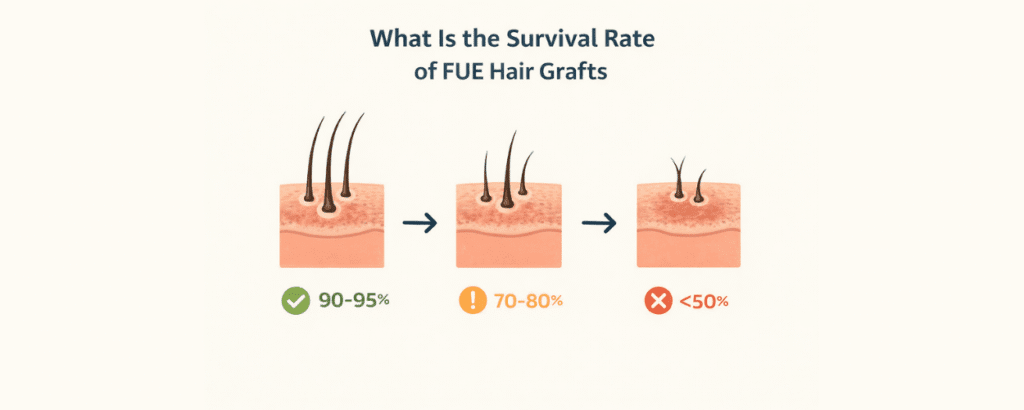
Not every extracted graft will survive and grow. A high graft survival rate – achieved through specialist surgical technique, careful graft handling, and good aftercare – is essential to maximising the density and coverage of the final result. At Capital Hair Restoration, our specialist approach to afro hair extraction consistently achieves strong survival rates.
Surgical Planning
A transplant planned without reference to future hair loss can look incongruous over time – a restored hairline surrounded by progressive native hair loss, for example. Good surgical planning anticipates the future and designs results that will continue to look natural for decades.
Aftercare Compliance
The early recovery period is critical to graft survival. Patients who follow their aftercare plan carefully – avoiding tension, protecting from sun and heat, washing correctly, and staying in contact with their consultant – consistently achieve better long-term outcomes.
Ongoing Hair Health Maintenance
Maintaining the health of both the transplanted and native hair after surgery – through appropriate scalp care, medical treatments where recommended, and lifestyle choices that support healthy hair growth – contributes to the quality of results over the long term.
“Permanence is the goal, but quality of permanence is what we are really aiming for. A transplanted hair that grows thinly because of poor graft survival is permanent in the technical sense but not in the way that matters to the patient. Everything we do – from the extraction technique to the aftercare support – is designed to make sure that permanence translates into the full, natural, dense result the patient came to us for.”
— Steven Ambrose, Lead Consultant, Capital Hair Restoration
What Do Long-Term Afro Hair Transplant Results Look Like?
Patients who had their afro hair transplant at Capital Hair Restoration five, ten, or fifteen years ago continue to enjoy natural, dense results today. The transplanted hair has grown, been cut and styled hundreds of times, and continues to behave exactly as natural hair should. The curl pattern is intact, the hairline remains natural in appearance, and the result is indistinguishable from hair that was never lost.
For some patients, a second session many years later addresses areas where native hair has continued to thin – building on the original result rather than repairing it. This reflects good long-term planning rather than a failure of the initial procedure.
Your Next Step
To find out what permanent afro hair transplant results could look like for you, book a free consultation with the specialist team at Capital Hair Restoration. We have clinics available at Harley Street, London, Chelmsford, Cambridge, Guildford, Reading, Watford, Portsmouth, and Southampton.


Book Your Free Hair Transplant Consultation
Fill in your details and we'll get in touch with you shortly.