


FUE vs FUT for Afro Hair: Which Is Better?
FUE vs FUT for Afro Hair: Which Is Better?

FUE or FUT for Afro Hair: Understanding Your Options
When researching an afro hair transplant, one of the first technical decisions you will encounter is the choice between FUE (Follicular Unit Extraction) and FUT (Follicular Unit Transplantation). Both techniques can produce excellent results, but they work differently, leave different evidence, and suit different patients.
For afro hair specifically, this decision carries additional weight because of the unique structural characteristics of tightly coiled follicles. Understanding the differences – and how each technique applies to afro hair in particular – helps you have a more informed conversation with your surgeon and ultimately make the right choice for your goals and lifestyle.
“The FUE versus FUT conversation is one I have with almost every new patient, and my recommendation is always based on the individual in front of me rather than a blanket preference for one technique. For the majority of our afro hair patients, FUE is the right choice – but there are cases where FUT offers real advantages, and I would never dismiss it simply because FUE is more popular. The best technique is the one that gives that specific patient the best result.”
— Steven Ambrose, Lead Consultant, Capital Hair Restoration
What Is FUE?
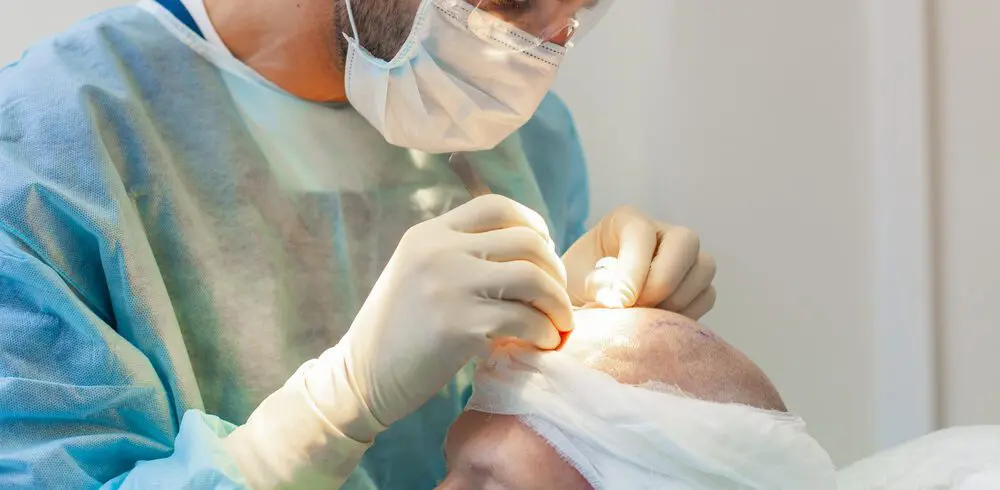
Follicular Unit Extraction (FUE) is the most widely used hair transplant technique today. Individual follicular units are extracted one at a time from the donor area using a specialist micro-punch tool, leaving tiny circular marks that heal within a week or two and are virtually undetectable once healed.
The extracted grafts are then implanted into the recipient area individually, with precise control over the angle, depth, and direction of each placement.
Key advantages of FUE for afro hair:
- No linear scar – patients can wear their hair very short without any visible evidence of surgery
- Faster recovery – no sutures means less post-operative discomfort and quicker healing
- More flexible donor harvesting – grafts can be taken from a wider area of the scalp and, if needed, from body hair
- Suitable for most patients with moderate hair loss
The challenge with FUE for afro hair: The curved follicular structure of afro-textured hair makes individual extraction significantly more technically demanding. Transection risk is higher than for straight hair, and it requires a surgeon with specific, extensive experience in afro FUE to achieve consistently high graft survival rates.
What Is FUT?
Follicular Unit Transplantation (FUT) – also known as the strip method – involves surgically removing a narrow strip of scalp from the donor area, typically at the back of the head. This strip is then dissected under magnification by a skilled technician team into individual follicular units, which are implanted into the recipient area in the same way as FUE grafts.
FUT leaves a linear scar across the back of the scalp, which is closed with sutures. The scar is typically concealed by the surrounding hair once healed.
Key advantages of FUT for afro hair:
- Higher graft yield per session – FUT can provide more grafts in a single procedure than FUE, making it suitable for patients with extensive hair loss
- Lower transection risk at the extraction stage – because grafts are dissected under magnification from a strip rather than extracted individually, the risk of follicle damage during harvest is reduced
- Potentially better graft survival in some afro hair cases where individual FUE extraction is particularly challenging
The challenge with FUT: The linear scar is permanent, though it typically becomes very difficult to see once healed and covered by surrounding hair. Patients who prefer to wear their hair very short at the back may find the scar visible. Recovery is slightly longer due to the sutures.
FUE vs FUT for Afro Hair: Side-by-Side Comparison
| Factor | FUE | FUT |
| Scarring | Tiny circular marks, virtually invisible | Linear scar at back of scalp |
| Recovery time | Faster – no sutures | Slightly longer – sutures removed at 10-14 days |
| Graft yield per session | Good – typically up to 3,000-4,000 grafts | Higher – can exceed 4,000 grafts in a single session |
| Transection risk (afro hair) | Higher – requires specialist surgeon | Lower at extraction stage |
| Suitable for short styles | Yes | Less so – linear scar may be visible at very short lengths |
| Best for | Most patients with moderate hair loss | Extensive hair loss requiring maximum grafts |
Which Technique Is Recommended for Most Afro Hair Patients?
For the majority of Black men seeking hair restoration, FUE is the recommended technique. The absence of a linear scar, the faster recovery, and the flexibility of the approach make it the preferred option for most patients – particularly those who favour short styles, fades, or any cut that keeps the back of the scalp close-cropped.
FUT may be recommended when the patient requires a very high number of grafts in a single session, when donor area characteristics make FUE extraction particularly challenging, or when a combined FUE and FUT approach would maximise available graft supply across multiple sessions.
The decision is always made on an individual basis during your consultation at Capital Hair Restoration, based on a thorough assessment of your specific situation.
“I always say to patients: do not let the technique drive the decision. Let your hair loss pattern, your lifestyle, and your goals drive the decision – and then we select the technique that best serves those factors. For most of the Black men we see, FUE gives them everything they need. But I never dismiss FUT as an option, and for some patients it genuinely is the better surgical choice.”
— Darryl King, CEO, Capital Hair Restoration
Your Next Step
To discuss which technique is right for your specific hair type and hair loss pattern, book a free consultation with the specialist team at Capital Hair Restoration. Clinics available at Harley Street, London, Chelmsford, Cambridge, Guildford, Reading, Watford, Portsmouth, and Southampton.


Book Your Free Hair Transplant Consultation
Fill in your details and we'll get in touch with you shortly.