


What Density Can You Achieve with a FUE Hair Transplant?
What Density Can You Achieve with a FUE Hair Transplant?
What Density Can You Achieve with a FUE Hair Transplant?
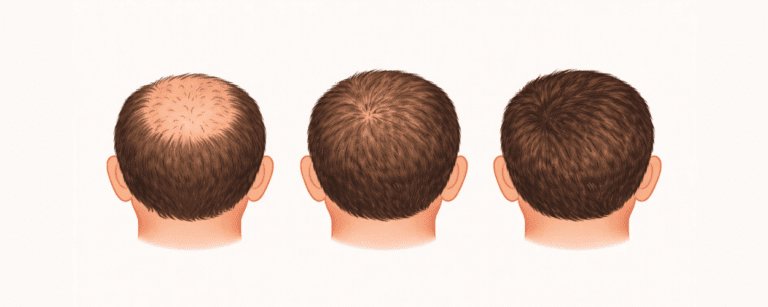
One of the most important questions patients ask before an FUE hair transplant is how dense the final result will be.
Hair transplant density plays a key role in how natural and full the outcome appears. However, understanding what density can realistically be achieved with an FUE hair transplant is essential for setting the right expectations.
An FUE hair transplant is designed to restore the appearance of hair, not necessarily replicate the exact density you had before hair loss began.
The goal is to create natural-looking coverage that blends seamlessly with your existing hair.
Key Takeaway: FUE Hair Transplant Density
- Density refers to how thick the hair appears after a transplant
- FUE aims to create natural-looking density rather than maximum density
- The final result depends on graft numbers, placement, and donor area
- A balanced approach delivers the most realistic outcome
What Is Hair Transplant Density?
Hair transplant density refers to how many hair grafts are placed within a specific area of the scalp.
It is often measured as: Grafts per square centimetre (grafts/cm²)
Each graft contains between one and four hairs, meaning overall hair density depends not only on the number of grafts but also on their composition.
In an FUE hair transplant, density is carefully controlled to:
- Achieve natural coverage
- Maintain proper blood supply to each graft
- Ensure long-term survival of the follicles
Placing too many grafts too close together can affect healing and reduce graft survival. This is why density must be balanced rather than maximised.
Hair transplant density is not about recreating your original hair exactly. It is about creating the appearance of fullness through careful graft placement, angle, and overall design.
Darryl King – Capital Hair Restoration – Hair Consultant
What Is Natural Hair Density?
To understand FUE hair transplant density, it helps to compare it with natural hair density.
In a non-balding scalp: Natural density is typically around 80 to 100 follicular units per cm²
However, not all of this density is required to create the appearance of full hair.
In reality: Around 40 to 60 grafts per cm² can create a visually dense and natural result
This is because the human eye perceives density based on:
- Hair thickness
- Hair colour contrast with the scalp
- Hair direction and styling
This concept is often referred to as visual density.
What Density Can FUE Achieve?
In most cases, an FUE hair transplant can achieve: 30 to 50 grafts per cm² in a single session
This is enough to:
- Create a natural-looking hairline
- Provide good coverage across thinning areas
- Blend with existing hair
Higher densities may be achieved in certain areas, particularly the hairline, where visual impact is most important.
However, achieving full natural density (80+ grafts/cm²) is usually not possible in a single FUE procedure due to limitations of the donor area.
Why FUE Does Not Aim for Maximum Density
An FUE hair transplant is not about placing as many grafts as possible.
Instead, it focuses on:
- Strategic placement of grafts
- Natural hairline design
- Long-term planning for future hair loss
Using too many grafts in one area can:
- Compromise blood supply
- Reduce graft survival
- Create an unnatural appearance
A well-executed FUE hair transplant uses density in a way that looks natural rather than artificial.

How Many Grafts per cm² Are Used in a FUE Hair Transplant?
One of the most important factors in FUE hair transplant density is how many grafts are placed per square centimetre.
As a general guide:
- Hairline: 40 to 50 grafts/cm²
- Mid-scalp: 30 to 40 grafts/cm²
- Crown: 20 to 30 grafts/cm²
These ranges are not fixed. The exact number depends on your hair type, donor area, and overall treatment plan.
In an FUE hair transplant, density is adjusted based on the area being treated and the visual impact required.
Why Density Varies Across the Scalp
Different areas of the scalp require different approaches to density.
This is because:
- Some areas are more visible than others
- Hair grows in different patterns across the scalp
- Donor grafts need to be used efficiently
Hairline Density
The hairline is the most important area in terms of visual impact.
In an FUE hair transplant:
- Higher density is used at the front
- Single-hair grafts create a soft, natural edge
- Multi-hair grafts are placed behind to build fullness
The goal is to create a natural transition rather than a solid, unnatural line.
Even a relatively small number of grafts can create the appearance of strong density when placed correctly.
A natural result comes from balance, not maximum density. Using grafts strategically across the hairline and scalp creates a look that blends seamlessly rather than appearing artificial.
Steven Ambrose – Capital Hair Restoration – Hair Consultant
Mid-Scalp Density
The mid-scalp acts as the bridge between the hairline and crown.
In this area:
- Moderate density is used
- Grafts are spaced to create even coverage
- The focus is on blending rather than maximum thickness
This helps maintain a balanced and natural look across the scalp.
Crown (Vertex) Density
The crown requires a different approach in an FUE hair transplant.
This is because:
- Hair grows in a circular pattern
- The area is larger and requires more grafts
- Density is less visually noticeable compared to the hairline
For this reason:
- Lower graft density is typically used
- Coverage is prioritised over thickness
In many cases, the crown may be treated separately or as a secondary priority.
Coverage vs Density: What Matters More?
A key concept in FUE hair transplant density is the balance between coverage and density.
- Coverage refers to how much of the scalp is filled
- Density refers to how thick the hair appears
Because the donor area is limited, it is not always possible to achieve high density across the entire scalp.
Instead, the goal is to:
- Prioritise the most visible areas
- Use grafts efficiently
- Create the illusion of fullness
In many cases, wider coverage with slightly lower density produces a more natural result than concentrating grafts in a small area.
How Graft Placement Affects Density
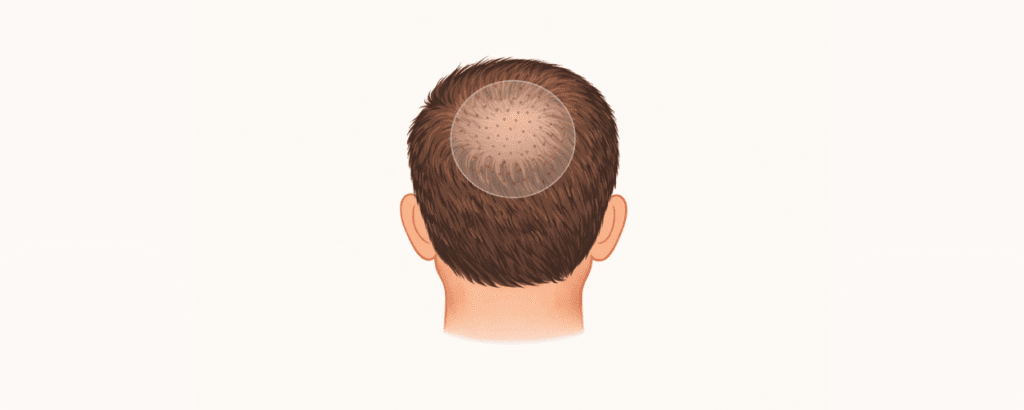
Density is not only about how many grafts are used, but how they are placed.
In an FUE hair transplant:
- The angle of each graft affects how hair falls
- Direction determines how hair blends
- Spacing ensures proper blood supply
When grafts are placed correctly, they create the appearance of greater density without needing maximum graft numbers.
This is why experienced surgical technique plays such a critical role in the final result.
What Affects FUE Hair Transplant Density?
The density you can achieve with an FUE hair transplant is not the same for every patient.
Several factors influence how dense the final result will appear.
Donor Area Strength
The donor area is one of the most important factors in determining FUE hair transplant density.
This is because:
- It provides the grafts used in the procedure
- It has a limited number of follicles available
- It must be preserved for long-term use
Patients with strong, dense donor hair can typically achieve higher density results.
If the donor area is weaker, grafts need to be used more carefully to ensure natural coverage without causing visible thinning.
Hair Thickness
Hair thickness has a major impact on how dense the result appears.
- Thicker hair creates more coverage per graft
- Finer hair may require more grafts to achieve the same visual effect
This means two patients with the same number of grafts can have very different results in terms of perceived density.
Hair Colour and Skin Contrast
The contrast between hair colour and scalp colour also affects density.
- Low contrast (for example, dark hair on dark skin or light hair on light skin) makes hair appear fuller
- High contrast (for example, dark hair on a light scalp) can make density appear lower
This is an important part of how visual density is created.
Hair Characteristics (Straight vs Curly)
Hair type also plays a role in FUE hair transplant density.
- Curly or wavy hair creates more natural volume and coverage
- Straight hair tends to lie flatter, which can make density appear lower
Patients with textured hair often achieve stronger visual density with fewer grafts.
Size of the Area Being Treated
The larger the area being treated, the more grafts are required to achieve density.
If grafts are spread across a wide area:
- Coverage increases
- Density per cm² may decrease
This is why prioritisation is important in an FUE hair transplant.
Many patients are surprised by how effective lower graft densities can be. When placed correctly, even 30 to 50 grafts per square centimetre can create strong visual density and natural coverage.
Darryl King – Capital Hair Restoration – Hair Consultant
Can You Achieve Full Density with a FUE Hair Transplant?
One of the most common questions is whether full natural density can be restored.
In most cases: Full original density is not achievable in a single FUE procedure
This is due to:
- Limited donor hair
- The need to maintain donor area appearance
- Blood supply limitations in the recipient area
However, this does not mean results will look thin.
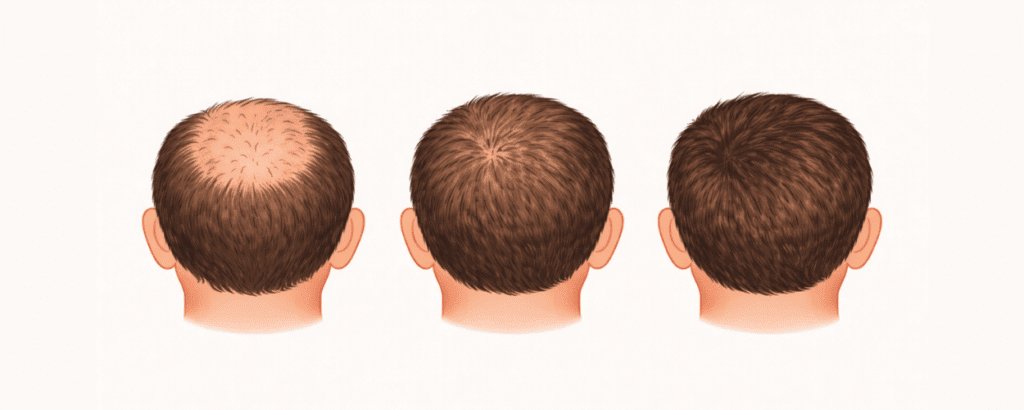
A well-planned FUE hair transplant can:
- Create natural-looking density
- Restore the appearance of a full head of hair
- Blend seamlessly with existing hair

Can Density Be Increased Over Time?
In some cases, density can be improved with additional treatment.
Options may include:
- A second FUE procedure to increase graft numbers
- Combining treatments such as PRP or medication
- Ongoing hair loss management to preserve existing hair
This approach is often used when:
- Larger areas are treated initially for coverage
- Additional density is desired later
At Capital Hair Restoration, long-term planning is part of every FUE hair transplant, ensuring that density can be adjusted over time if needed.
Why Expectations Matter
Understanding what density can realistically be achieved is essential.
A successful FUE hair transplant is not about:
- Maximum graft numbers
- Recreating teenage density
It is about:
- Achieving a natural appearance
- Creating balanced coverage
- Delivering results that suit your age and hair loss pattern
Common Myths About FUE Hair Transplant Density
There are several misconceptions about what density can be achieved with an FUE hair transplant.
“A Hair Transplant Can Restore Full Density”
This is not usually the case.
While an FUE hair transplant can create excellent results, it does not typically restore the full natural density of a non-balding scalp.
Instead, it creates the appearance of density through:
- Strategic graft placement
- Hairline design
- Blending with existing hair
“More Grafts Always Means Better Density”
Using more grafts does not always lead to better results.
Placing too many grafts too close together can:
- Reduce blood supply
- Affect graft survival
- Lead to unnatural results
A balanced approach is more effective than simply increasing graft numbers.
“FUE Results Will Look Thin”
When performed correctly, an FUE hair transplant does not look thin.
Even with lower graft density than natural hair, the result can appear full due to:
- Hair characteristics
- Placement technique
- Visual density
Most patients achieve results that look natural in everyday situations.
How to Achieve the Best Possible Density
Achieving strong FUE hair transplant density depends on several key factors.
These include:
- Choosing an experienced clinic
- Having a well-planned hairline design
- Managing donor area carefully
- Following aftercare instructions
At Capital Hair Restoration, density is planned as part of a long-term strategy, ensuring natural results that continue to look good over time.
What Should You Expect from Your Results?
With a well-executed FUE hair transplant, you can expect:
- A natural-looking hairline
- Even coverage across treated areas
- Hair that blends with your existing hair
- A result that improves over time
While it may not replicate full natural density, the outcome is designed to restore confidence and create a realistic appearance.

Your Next Step
Understanding what density can realistically be achieved with an FUE hair transplant is one of the most important parts of planning your treatment. While no procedure can usually restore the exact density you had before hair loss began, a well-planned transplant can create the appearance of fullness, improve coverage, and deliver a natural-looking result that blends seamlessly with your existing hair.
At Capital Hair Restoration, every treatment is tailored to your individual hair characteristics, donor area, and long-term goals. Rather than focusing purely on graft numbers, we focus on achieving the best visual density possible while maintaining natural hair growth patterns and preserving donor hair for the future.
During your consultation, we will:
- Assess your donor area strength and available grafts
- Discuss realistic density expectations based on your hair type
- Explain the balance between coverage and density
- Show real patient results from similar cases
- Create a personalised graft placement strategy designed around your goals
Consultations are available across the UK, including Harley Street, London, Chelmsford, Brentwood, Cambridge, Guildford, Reading, Watford, and Brighton.
The best hair transplant results are not measured by graft numbers alone. They are measured by how natural the result looks, how well it frames your face, and how much confidence it restores. With the right planning, even moderate graft densities can create a remarkably full and natural appearance.
Book your free FUE hair transplant consultation today and discover what level of density is realistically achievable for your hair, donor area, and long-term goals.


Book Your Free Hair Transplant Consultation
Fill in your details and we'll get in touch with you shortly.