


Can You Have a Beard Transplant with No Facial Hair at All?
Can You Have a Beard Transplant with No Facial Hair at All?

Can You Have a Beard Transplant with No Facial Hair at All?
For some men, the issue is not a patchy beard or thin coverage in certain areas. It is the complete absence of facial hair. Whether due to genetics, a medical condition, or scarring that has affected the entire beard area, some men reach adulthood without ever being able to grow a beard at all. If this is your situation, you may have wondered whether a beard transplant is even a realistic option for you, or whether the procedure is only suited to men who already have some existing growth to build on.
The answer is that a beard transplant can absolutely be performed on men with no existing facial hair. In fact, some of the most transformative results in beard restoration come from patients who started with nothing at all. This article explains how a full beard transplant from scratch works, what is involved, and what you can realistically expect from the process and the outcome.
“Some of the most impressive beard transplant results come from patients who started with no facial hair at all. The key is careful planning, natural design, and making the most of the donor hair available.”
Darryl King, Hair Transplant Consultant
Why Some Men Have No Facial Hair
Before looking at the procedure itself, it is worth understanding the reasons why some men have no facial hair at all, as this can have a bearing on suitability and the approach taken.
The most common reason is genetics. Facial hair growth is driven by the sensitivity of follicles to androgens, particularly testosterone and its derivative DHT. In some men, the follicles in the beard area simply do not respond to these hormones in a way that produces visible hair growth. This is an inherited trait, and it is entirely beyond the individual’s control. No hormone supplement, topical product, or lifestyle change will cause follicles to grow where the genetic programming does not support it.
Alopecia areata and its more complete forms, alopecia totalis and alopecia universalis, can also result in total absence of facial hair. These are autoimmune conditions in which the body’s immune system attacks hair follicles, causing them to stop producing hair. Beard transplants for patients with alopecia require careful consideration, as the underlying condition needs to be stable before surgery is appropriate.
Scarring from burns, surgery, or significant injury can also destroy follicles across a wide area of the face, resulting in complete absence of growth in the affected zones. In these cases, the skin itself may present additional challenges for transplantation, and a thorough assessment of the scar tissue is an essential part of the consultation process.
Finally, some men who have undergone certain medical treatments, including chemotherapy or radiation to the head and neck area, may experience permanent loss of facial hair as a result. Candidacy for transplantation in these cases depends on the extent of any follicle damage and the overall health of the skin.
Understanding the underlying cause of your absent facial hair is important not just for determining suitability, but for planning the procedure correctly and setting realistic expectations for the outcome.
Is a Beard Transplant Possible with No Existing Facial Hair?
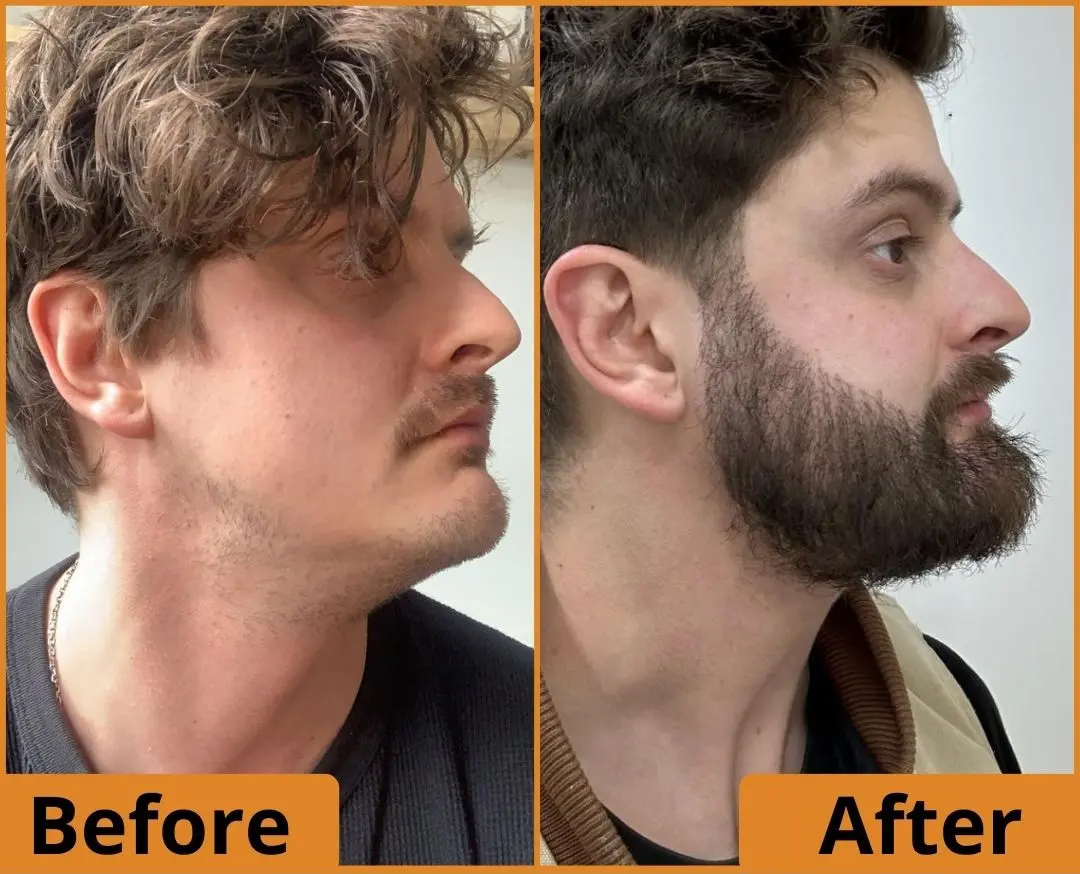
One of the most common misconceptions about beard transplants is that the procedure requires some existing facial hair to work with. This is not the case. A beard transplant does not rely on existing growth to produce a natural result. The naturalness of the outcome comes entirely from the skill with which the grafts are placed, not from blending with pre-existing hair.
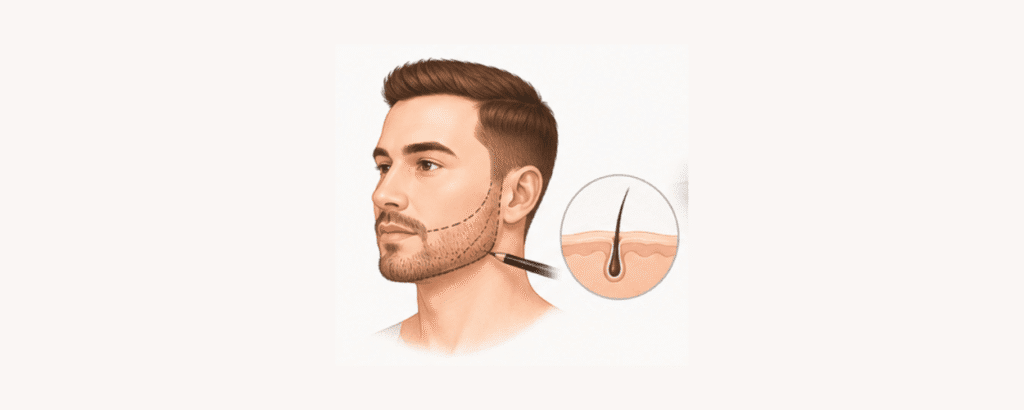
When there is no existing facial hair, the surgeon has complete freedom to design the beard from scratch. This is in some ways a more straightforward task than working around existing patchy growth, because there is no need to match angles and directions to surrounding hair. Instead, the surgeon designs the entire beard layout based on your facial structure, your personal preferences, and the growth patterns that would look most natural for your face.
This design process is one of the most important parts of a full beard transplant. The surgeon will consider the shape of your face, the position of your jawline, the natural hairline of your scalp, and the style of beard you are hoping to achieve. Every aspect of the design, from the outer border of the beard to the density distribution across different zones, is planned carefully before a single graft is placed.
The result, when the procedure is performed well, is a beard that looks as though it simply grew there naturally. There is nothing about a transplanted beard that should look artificial or imposed. It is your own hair, growing from your own follicles, in a design that suits your face.
“A beard transplant does not require existing facial hair to be successful. When performed correctly, a beard can be designed entirely from scratch to suit the individual’s face, features, and long-term goals.”
Steven Ambrose, Hair Transplant Consultant
The Donor Area for a Full Beard Transplant
For men starting with no facial hair, the demands placed on the donor area are significantly greater than for a patchy beard procedure. A full beard typically requires a larger number of grafts, which means more follicles need to be available from the donor site without leaving it looking noticeably thinner.
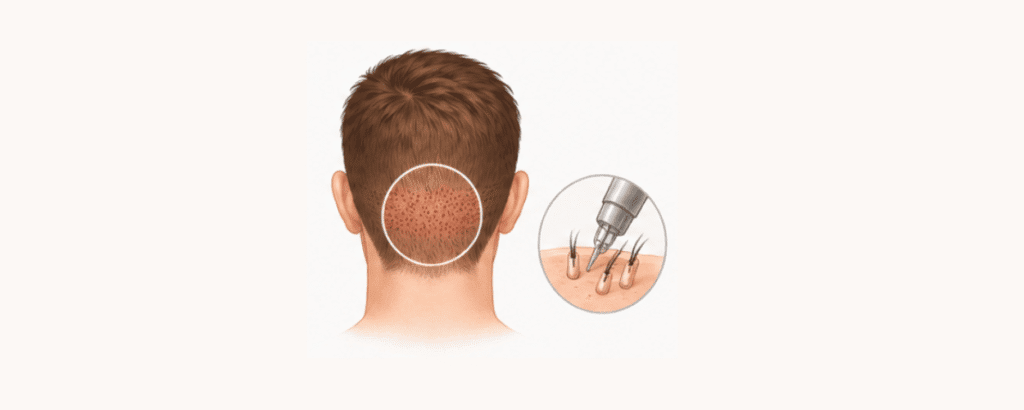
The donor area for a beard transplant is most commonly the back and sides of the scalp. This area is chosen because the hair is typically resistant to DHT and is therefore stable long-term. The density of follicles in this zone varies from person to person, and a thorough assessment of your donor area is one of the most important parts of the consultation process.
For a full beard transplant from scratch, the number of grafts required typically falls somewhere in the range of 1,500 to 3,500, though this varies considerably depending on the size of the beard area being covered, the density being aimed for, and the individual characteristics of the patient. Men with a naturally high donor density are generally better placed to achieve a fuller result in a single procedure.
Where donor density is more limited, it may be necessary to prioritise certain areas of the beard in the first procedure, with a view to adding further density in a second session once the first has fully matured. This is always discussed openly at consultation so that you have a clear picture of what is achievable and over what timeframe.
What Density Can You Achieve with a Full Beard Transplant?
Density is one of the most important and most frequently misunderstood aspects of a full beard transplant. Men who have never had facial hair often come to consultation with images of very full, dense beards in mind, and it is important to have an honest conversation about what is achievable and what factors influence the outcome.
The density of a transplanted beard is determined by several things. The number of grafts placed is the most obvious factor, but it is not the only one. The calibre and texture of the donor hair, the size of the beard area being covered, and the natural spacing that looks realistic for facial hair all play a role in the final result.
Facial hair does not grow at the same density as scalp hair. A natural beard has a characteristic spacing between individual hairs that is part of what makes it look like beard hair rather than scalp hair. Placing grafts too densely in an attempt to maximise coverage can actually produce a result that looks less natural, because it does not replicate the spacing patterns of real facial hair. An experienced surgeon understands this and plans graft placement to achieve a density that looks authentic rather than simply maximising the number of grafts per square centimetre.
For men starting from nothing, a single procedure can typically achieve a natural, good-looking beard with reasonable coverage. In some cases, particularly where a very full or dense result is desired, a second procedure after the first has matured may be considered. This is not a sign that the first procedure was unsuccessful. It is simply a reflection of the limits of what can be harvested from the donor area in one session without compromising it.
Your surgeon will give you a clear and honest assessment of the density you can realistically expect based on your individual donor characteristics and the size of the area being treated. This is one of the most important conversations to have at consultation, and it is one where honesty is far more valuable than optimism.
What Does the Procedure Involve?
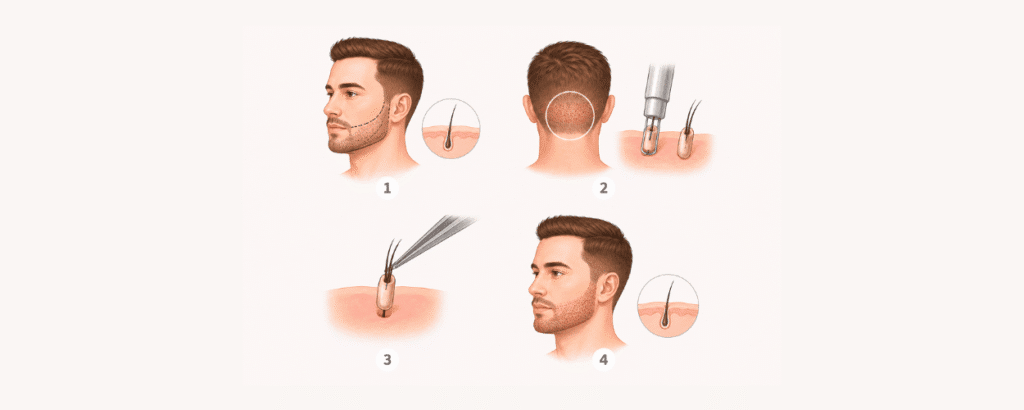
A full beard transplant from scratch follows the same fundamental process as any FUE beard transplant, but on a larger scale. The procedure is performed under local anaesthetic, meaning you will be awake throughout but should not feel any pain in the treatment areas. A sedative may be offered to help you feel relaxed during what is typically a longer procedure.
The surgeon begins by designing the beard, mapping out the outer borders and the density distribution across the different zones of the face. This design is discussed and agreed with you before any extraction begins.
Donor follicles are then extracted from the back and sides of the scalp one by one using a precision punch tool. Each follicular unit is carefully prepared and kept in conditions that preserve graft viability until it is ready to be placed.
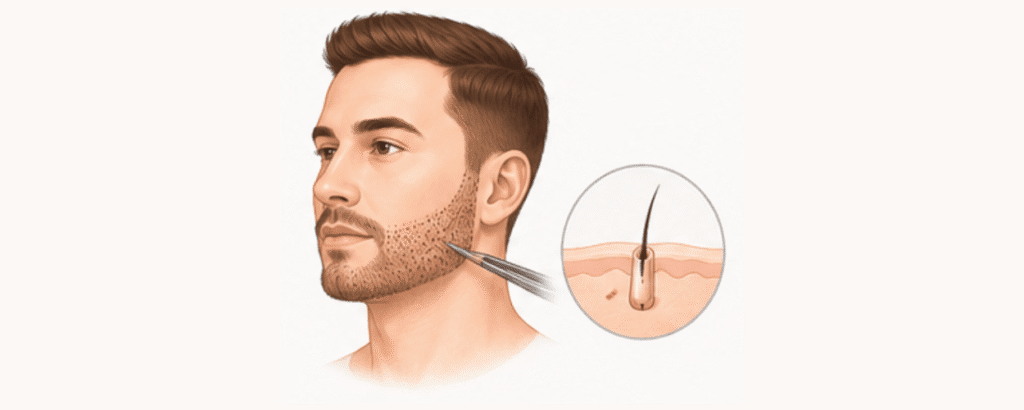
The implantation phase involves creating small recipient sites across the beard area at precisely controlled angles and directions, then placing each graft individually into its designated site. For a full beard transplant, this process is detailed and time-consuming, and a procedure of this scale typically takes between six and ten hours depending on the number of grafts involved.
“For men who have never been able to grow a beard naturally, the transformation is often about more than appearance. It is about having options and the confidence that comes with finally achieving the look they have always wanted.”
Darryl King, Hair Transplant Consultant
What to Expect During Recovery
Recovery from a full beard transplant follows a predictable pattern, and knowing what to expect at each stage makes the process considerably easier to manage. For men who have never had any facial hair, the early weeks of recovery can feel particularly strange, as the transplanted hairs shed before the new growth begins. Understanding that this is entirely normal is an important part of approaching the recovery with the right mindset.
In the first 24 to 48 hours after the procedure, you can expect some redness and swelling in both the beard area and the donor site at the back of the scalp. This is a normal response to the procedure and settles quickly in most patients. Small scabs will form around each graft site over the first few days. These are a natural part of the healing process and should not be picked or disturbed. Most patients find that the scabs have cleared by around ten days post-procedure.
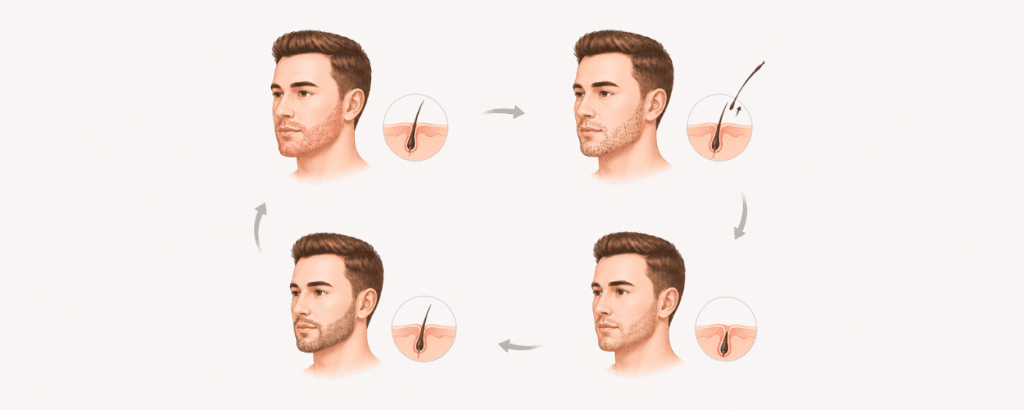
From around two to four weeks after surgery, the transplanted hairs will begin to shed. For men who have been eagerly anticipating their new beard, this can be an unsettling experience. It is important to understand that the shedding of the hair shaft does not mean the follicle has been lost. The follicle remains intact beneath the skin and will begin producing a new hair from around the three to four month mark. The shedding phase is simply a normal part of the hair growth cycle being reset following transplantation.
During the recovery period, certain activities and products will need to be avoided. Intense physical exercise should be avoided for at least two weeks, as increased blood pressure and sweating can affect graft survival in the early stages. Swimming and exposure to direct sunlight on the treated areas should also be avoided during the initial healing period. Shaving the beard area will need to wait until your surgeon confirms it is safe to do so, typically from around four weeks post-procedure.
Your aftercare instructions will be provided in full detail before you leave the clinic following your procedure. Our team at Capital Hair Restoration is available throughout your recovery to answer questions and provide reassurance at every stage.

The Results Timeline
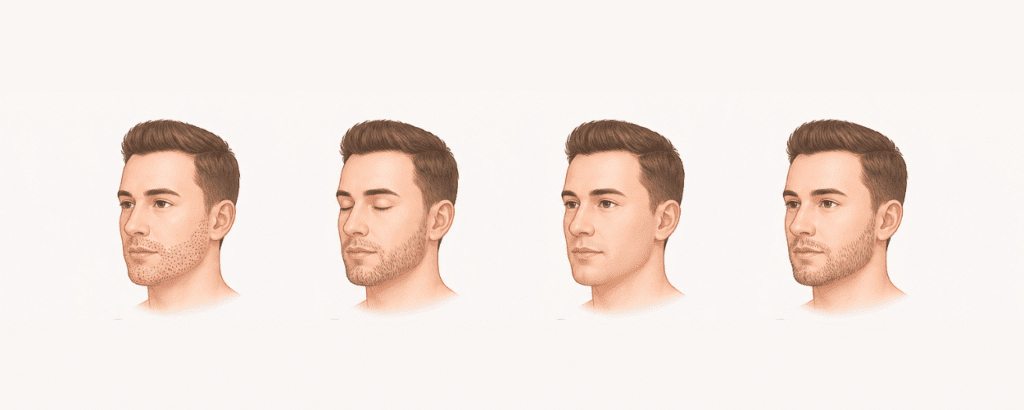
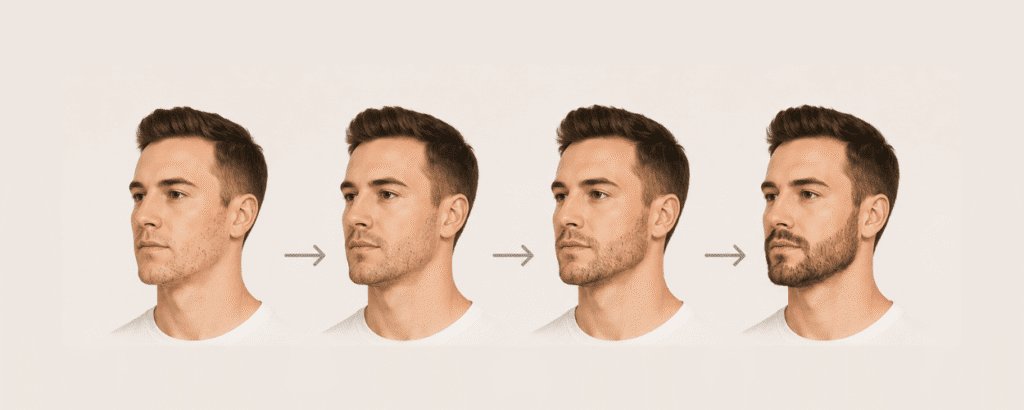
For men who have never had facial hair, watching the results of a beard transplant develop over the months following surgery is a genuinely remarkable experience. Understanding the timeline helps to manage expectations and makes the waiting period more bearable.
Months one and two are largely about healing. The transplanted hairs shed, the skin settles, and there is little visible change in the beard area. This is the period that requires the most patience.
From around three to four months, new hair growth begins to emerge from the transplanted follicles. The hairs at this stage are typically fine and soft, and the coverage may appear patchy or uneven. This is completely normal and does not reflect the final result.
By six to eight months, meaningful density and coverage should be visible. The hairs are thickening and maturing, and the shape of the beard is becoming clearer. Most patients find this stage genuinely exciting as the result begins to take shape.
The final result, where the transplanted hair has fully matured to its permanent thickness and density, is typically seen at around the twelve-month mark. For some patients, continued improvement is visible beyond this point.
Is a Full Beard Transplant Right for You?
For men who have never been able to grow a beard, a full beard transplant represents a genuinely life-changing possibility. The ability to grow, style, and maintain a beard for the first time is something that many patients describe as transformative, and the permanence of the result means it is a decision that pays dividends for life.
That said, it is important to be realistic about what the procedure involves and what it can deliver. A full beard transplant is a significant surgical undertaking that requires a healthy donor area, a skilled and experienced surgeon, and a patient who is prepared to commit to the recovery process and the results timeline. It is not a quick fix, and the full result takes time to develop.
The best outcomes come from patients who have done their research, had a thorough consultation, and gone into the procedure with clear and realistic expectations. If those conditions are in place, a full beard transplant from scratch can produce results that are natural, permanent, and genuinely outstanding.
If you are unsure whether you are a suitable candidate, or simply want to understand more about what the procedure would involve in your specific case, a consultation is the only way to get accurate, personalised answers. Every patient is different, and the information you receive at consultation will be tailored entirely to your individual circumstances.
Why Choose Capital Hair Restoration?
Capital Hair Restoration is one of the UK’s most established hair restoration clinics, with over 20 years of experience and more than 8,000 successful procedures across scalp, facial, and body hair restoration. Our GMC-registered surgeons bring a level of skill, precision, and artistic judgement to every beard transplant that is reflected in the quality of the results we achieve.
We understand that for men who have never had facial hair, the decision to have a beard transplant carries a particular emotional weight. Our approach to every patient is one of genuine care, honesty, and respect. We will give you an accurate picture of what is achievable in your case, guide you through every stage of the process, and support you through your recovery with a level of aftercare that matches the quality of the procedure itself.
With consultation clinics across the UK and surgery performed at our London, Essex, and Manchester clinics, we make it straightforward to take the first step wherever you are based.
Book a Beard Transplant Consultation
Having little or no facial hair naturally does not mean growing a beard is impossible. For many men, genetics determine the extent of facial hair development, and no amount of grooming products, supplements, or waiting will create follicles where they do not already exist. A beard transplant offers a permanent solution by introducing healthy hair follicles into the beard area and allowing natural facial hair growth to develop over time.
One of the biggest misconceptions about beard transplantation is that some existing beard growth is required for the procedure to work. In reality, a beard can be designed entirely from scratch. With careful planning, appropriate graft selection, and precise implantation, it is possible to create a beard that looks natural, suits your facial structure, and continues growing for life.
The key is understanding what is realistically achievable based on your donor hair supply, facial characteristics, and desired beard style. Every patient is different, and the best results come from a personalised approach that balances coverage, density, and long-term donor area preservation.
If you are considering a beard transplant and currently have little or no facial hair, Capital Hair Restoration offers consultations across the UK, including Brentwood, Bristol, Bromley, Chelmsford, Ipswich, Milton Keynes, Oxford and Tunbridge Wells.
At Capital Hair Restoration, consultations focus on donor area assessment, graft requirements, beard design, density planning, recovery expectations, and long-term natural results. Our experienced team will explain exactly what can be achieved in your case and create a personalised treatment plan designed around your goals.
Book your consultation today and take the first step towards achieving the beard you’ve always wanted.


Book Your Free Hair Transplant Consultation
Fill in your details and we'll get in touch with you shortly.