


How Many Grafts Are Needed for an Afro Hair Transplant?
How Many Grafts Are Needed for an Afro Hair Transplant?

How Many Grafts Are Needed for an Afro Hair Transplant?
One of the first questions patients ask when researching an afro hair transplant is how many grafts they will need. It is a sensible question – graft count is the primary driver of both cost and procedure length, and understanding what influences it helps you have a more informed conversation with your surgeon.
The honest answer is that no accurate graft count can be given without a clinical assessment. Every patient’s hair loss pattern, donor density, hair characteristics, and desired result is different. However, this guide explains the key factors that influence graft requirements for afro hair specifically, and provides indicative ranges to help you understand what to expect.
“Graft count is always the number patients want to know before anything else, and I understand why – it gives them a sense of scale and cost. What I try to help patients understand is that for afro hair, the relationship between graft count and visual result is different from straight hair. The natural coil and volume of each afro hair graft means that fewer grafts can achieve significant coverage – but only when placed correctly by someone who understands how to use that advantage. The number on paper is only part of the story.”
— Steven Ambrose, Lead Consultant, Capital Hair Restoration
What Is a Graft?
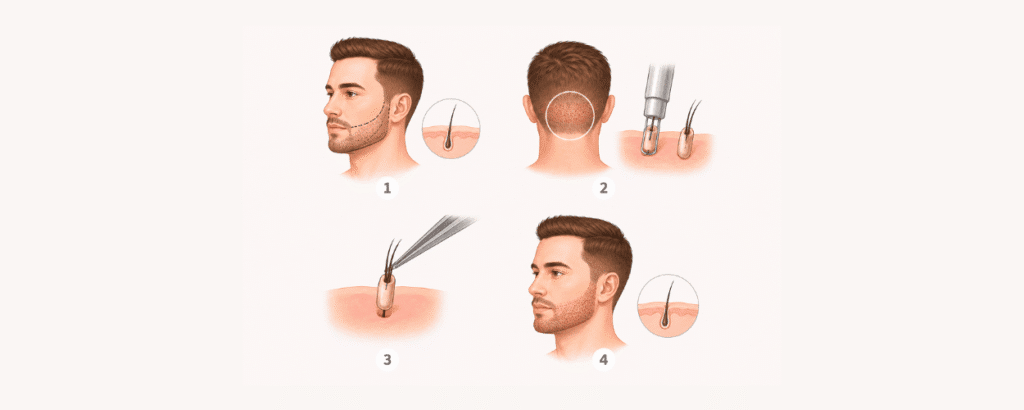
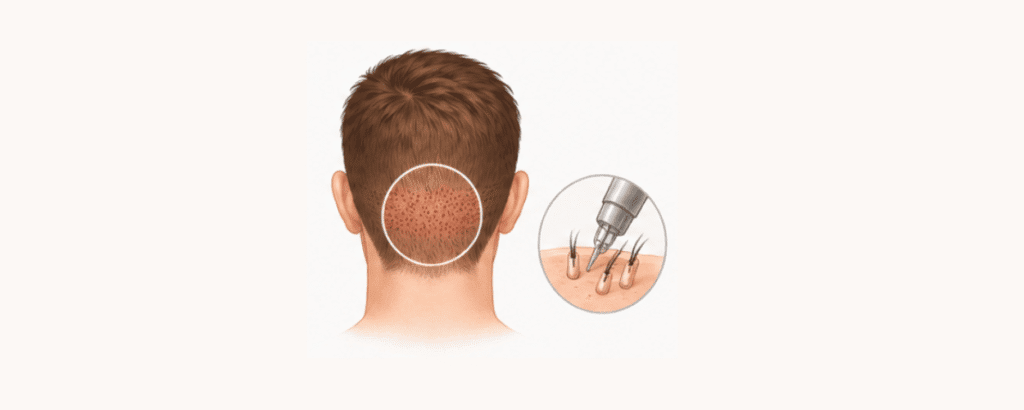
A graft is the basic unit of hair transplant surgery. Each graft is a small follicular unit containing between one and four individual hair follicles, along with the surrounding tissue needed to support them. Single-hair grafts are typically used at the very front of the hairline to create a natural, soft edge. Multi-hair grafts are placed further back to build density behind the hairline.
For afro hair, each graft produces a coiled hair shaft that covers more lateral surface area than a straight hair from the same graft. This is a meaningful advantage – in experienced hands, it allows strong visual coverage to be achieved more efficiently than in straight hair transplantation.
Factors That Determine How Many Grafts You Need
The Size of the Area Being Treated
The larger the recipient area, the more grafts are required to achieve adequate coverage. A hairline-only restoration requires significantly fewer grafts than a procedure addressing both the hairline and the crown, and far fewer than a case of extensive overall hair loss.
The Desired Density
Higher desired density means more grafts per square centimetre. Some patients want a full, dense result; others are happy with a natural coverage that reduces the appearance of hair loss without recreating full youthful density. Your surgeon will discuss density goals with you during consultation and plan accordingly.
Your Hair’s Curl Pattern and Shaft Diameter
Tighter coils and thicker hair shafts provide more coverage per graft. A patient with very tight 4C coils and thick hair shafts may achieve excellent coverage with fewer grafts than a patient with looser 3A curls and finer hair. Your surgeon will assess these characteristics during your consultation.
Donor Area Availability
The number of grafts available is ultimately limited by what the donor area can safely provide. Overharvesting the donor area depletes the supply for future procedures and can create visible thinning at the back of the scalp. Your surgeon will assess your donor density and calculate a safe extraction limit that preserves the long-term health and appearance of the donor area.
Hair Loss Progression
For younger patients or those with progressive hair loss, the surgeon must plan the graft distribution with future loss in mind. Transplanting too aggressively into areas that will continue to thin can leave the surrounding native hair looking sparse by comparison. A conservative, forward-thinking approach protects the long-term result.
Indicative Graft Count Ranges for Afro Hair Transplants
| Treatment Area | Indicative Graft Range | Notes |
| Hairline only (mild recession) | 800 to 1,500 grafts | Suitable for early recession or traction-related edge thinning |
| Hairline (moderate to significant recession) | 1,500 to 2,500 grafts | Including temple restoration where needed |
| Crown only | 1,000 to 2,000 grafts | Depends on size and desired density |
| Hairline and crown combined | 2,500 to 4,000 grafts | May require two sessions for extensive cases |
| Extensive hair loss (Norwood 5-7) | 3,500 to 5,000+ grafts | Full restoration; donor capacity is a key limiting factor |
These figures are indicative and may be lower than equivalent ranges for straight hair, reflecting the natural coverage advantage of afro-textured hair. Your actual graft count will be confirmed during your consultation.
How Is Graft Count Assessed During Consultation?
During your consultation at Capital Hair Restoration, your surgeon will assess:
- The size of the recipient area using scalp measurements and visual assessment
- Your donor area density using a dermatoscope to count follicular units per square centimetre
- Your hair shaft characteristics – calibre, curl type, and coverage per graft
- Your desired density and aesthetic goals
- Your hair loss trajectory and how it should be factored into the long-term plan
This assessment produces a personalised graft count recommendation that balances the goals of the current procedure with the long-term health of your donor area and the sustainability of your results over time.
“One of the things I am always careful about is not overpromising on graft numbers. I have seen cases where patients were told they needed 5,000 grafts at another clinic and then came to us for a second opinion. When we assessed them properly, we could see that 2,500 to 3,000 grafts, placed strategically using the natural coverage advantage of their afro hair, would achieve an equivalent or better visual result while preserving their donor area for the future. Getting the number right is as important as the surgery itself.”
— Darryl King, CEO, Capital Hair Restoration
Can You Have More Than One Session?
Yes. Some patients choose to have a second session – either to increase density in an area treated in the first procedure, or to address a new area as hair loss continues to progress. Planning your first session with future sessions in mind – and protecting the donor area accordingly – is an important part of the long-term strategy.
At Capital Hair Restoration, we always plan with the full picture in mind. Your first session is never treated in isolation – it is the first chapter of a longer hair restoration story, and we plan it accordingly.
Your Next Step
The most accurate way to understand how many grafts you need is to book a free in-person consultation with the specialist team at Capital Hair Restoration. We have clinics available at Harley Street, London, Chelmsford, Cambridge, Guildford, Reading, Watford, Portsmouth, and Southampton.


Book Your Free Hair Transplant Consultation
Fill in your details and we'll get in touch with you shortly.