


Finasteride for Hair Loss: Uses, Results & Side Effects (UK Guide)
Finasteride for Hair Loss: Uses, Results & Side Effects (UK Guide)
Finasteride Explained: Treatment, Results and Safety
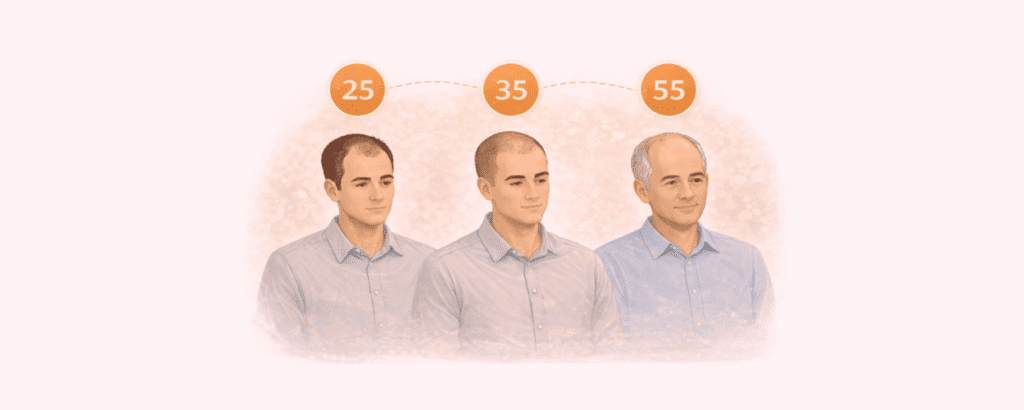
Hair loss is one of the most common concerns for men in the UK. Male pattern baldness (androgenetic alopecia) affects around half of men over 50, and many notice a receding hairline or thinning crown as early as their 20s or 30s. Among the available medical options, finasteride is one of the most widely prescribed and clinically proven treatments.
Known by the brand name Propecia when marketed for hair loss, finasteride is a prescription-only oral medication. It works by targeting the underlying biological process of male pattern baldness — slowing down follicle miniaturisation and, in many cases, encouraging visible regrowth. Approved by the FDA in 1997, finasteride has been studied extensively, with over two decades of data supporting its effectiveness.
Unlike hair transplants, which are surgical and permanent, or Minoxidil, which is applied topically, finasteride is taken once daily in tablet form. For men looking to slow, halt, or even reverse early-stage baldness, it is often considered a first-line medical treatment.
“At Capital Hair Restoration, we often advise patients that finasteride is one of the few evidence-based medications shown to slow male pattern baldness. It can give men valuable time and confidence back — but it must always be taken under proper medical guidance.” — Darryl King, CEO, Capital Hair Restoration
What is Finasteride?
Finasteride belongs to a class of drugs called 5-alpha reductase inhibitors. It was first developed to treat benign prostatic hyperplasia (BPH), an enlargement of the prostate. During research, its hair-preserving effects became clear. At the lower 1 mg daily dose, Finasteride is licensed specifically for the treatment of male pattern baldness in the UK.
It is important to note that Finasteride is only prescribed for men. It should not be taken by women or children due to the way it interacts with hormones — potentially harmful during pregnancy and ineffective in female hair loss.
How Does Finasteride Work?
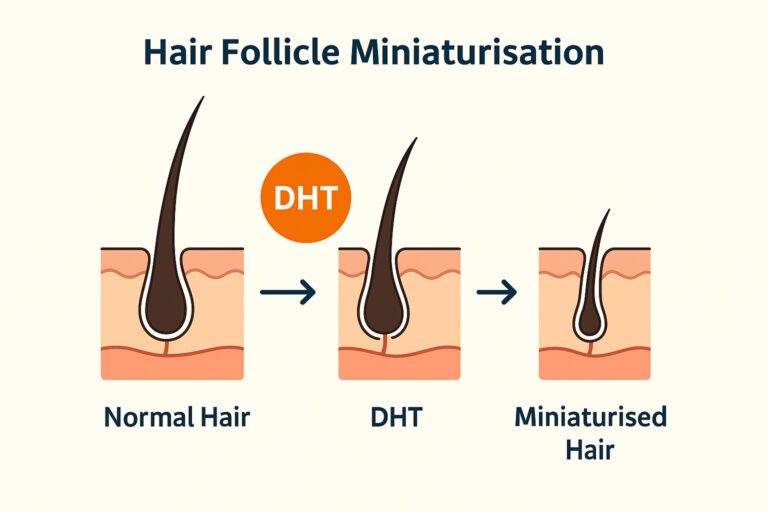
Finasteride helps with hair loss by reducing the impact of Dihydrotestosterone (DHT) — a by-product of testosterone. In men genetically predisposed to male pattern baldness, DHT binds to receptors in hair follicles, causing them to shrink (miniaturise) over time. This leads to shorter, finer hairs until follicles eventually stop producing visible hair.

By blocking the enzyme 5-alpha reductase, Finasteride lowers DHT levels in the scalp by up to 60–70%. With less DHT, vulnerable hair follicles can recover, producing thicker, healthier hair.
While Finasteride does not cure baldness, it can:
-
Slow or stop further hair loss
-
Improve hair density in thinning areas
-
Preserve natural coverage and confidence
Results timeline: Most men who respond to Finasteride notice visible changes within 3–6 months, with continued improvement up to one year. However, daily use is required to maintain results. If treatment is stopped, DHT levels return and hair loss usually resumes within 6–12 months.
Effectiveness and Results of Finasteride
When men consider treatment for hair loss, one of the first questions is: Does it really work? Finasteride is one of the few medications with strong clinical research showing it can slow, halt, and in many cases partially reverse male pattern baldness. Multiple peer-reviewed studies have tracked results in thousands of men across different stages of hair loss, giving us a clear picture of what to expect.
Clinical Effectiveness
Large-scale clinical trials have shown that Finasteride significantly reduces hair loss progression in most men who take it:
-
Over 80% of men maintained or improved hair count after two years of daily treatment.
-
Around 65% experienced visible regrowth, particularly in thinning crown areas.
-
Men on a placebo continued to lose hair at the expected rate, underlining the effectiveness of Finasteride in slowing male pattern baldness.
Longer-term data supports these findings. For example, a Japanese study following men for 10 years found that 90% maintained their hair and 99% avoided significant worsening while on Finasteride.

These results confirm what is often seen in clinical practice: men who begin treatment early and stay consistent are the ones who achieve the most stable, lasting benefits.
Timeline of Results
Hair growth cycles are naturally slow, so patience is essential. The typical Finasteride results timeline looks like this:
-
0–3 months: DHT suppression begins, but visible changes are rare. Some men may notice temporary shedding as weaker hairs fall out.
-
3–6 months: First signs of stabilisation — reduced shedding and early thickening.
-
6–12 months: Noticeable improvements in density, especially at the crown and mid-scalp.
-
12–24 months: Peak results achieved; hair appears thicker, healthier, and more resilient.
Most men who respond to treatment see changes within 3–6 months, but daily use is required to maintain results. If treatment is stopped, hair loss usually resumes within 6–12 months.
Where It Works Best
Finasteride is particularly effective in areas where follicles are still active but producing finer hairs. This is why the crown and mid-scalp often show the greatest response. Receding temples and hairlines can be more resistant, though many men still notice slowed loss or modest regrowth in these regions.
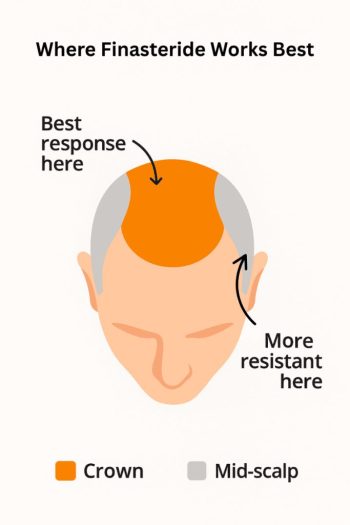
The earlier treatment is started, the better the outcome. Men who begin Finasteride at the first signs of thinning usually achieve the most visible preservation and regrowth.
Combination with Minoxidil
While Finasteride is effective on its own, many patients benefit from combining it with topical Minoxidil. The two treatments work in different ways:
- Finasteride reduces DHT levels, tackling the root hormonal cause of baldness.
- Minoxidil improves blood flow and stimulates follicles into the growth (anagen) phase.
Clinical research shows that combining Finasteride and Minoxidil produces superior results compared to either treatment alone, especially for men seeking both regrowth and long-term maintenance.
Before and After Results
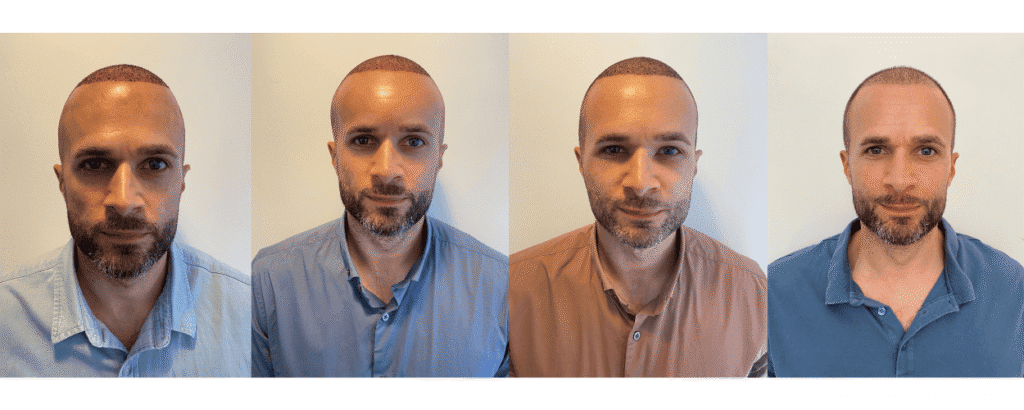
At Capital Hair Restoration, patients often report significant improvements after 6–12 months of consistent use. Crown coverage appears fuller, hair feels thicker, and confidence returns. While results vary, photographic comparisons clearly demonstrate the stabilising power of Finasteride in halting hair loss progression.
“Finasteride gave me my confidence back. Within a year I noticed the thinning on my crown had almost disappeared. I just wish I’d started sooner.” — Capital Hair Restoration Patient
Commonly Reported Side Effects
Clinical studies show that Finasteride is generally well tolerated, with side effects occurring in only a small minority of men. The most commonly reported issues involve sexual health and affect around 1–2% of users:
- Reduced libido (1–2%)
- Erectile dysfunction (1–2%)
- Reduced semen volume (under 2%)
These effects are usually mild and reversible. In most cases, they improve with continued treatment or resolve once the medication is stopped. Importantly, reported rates were only slightly higher than in men taking placebo (sugar pills), suggesting that natural variation and expectation (sometimes called the nocebo effect) may play a role.
Other occasional side effects, reported at much lower frequencies, can include:
- Breast tenderness or swelling (very rare)
- Testicular discomfort (rare)
- Rash or allergic reaction (extremely rare)
For the vast majority of men, Finasteride does not interfere with daily life. In fact, most report no noticeable side effects at all.
Long-Term Safety
Finasteride has been in use for more than 25 years. It was first prescribed at higher doses for prostate enlargement (Proscar 5 mg), and later approved at the lower hair-loss dose (Propecia 1 mg). Decades of clinical data confirm that it is safe for long-term use in men.
Some men express concerns about fertility. However, research shows that Finasteride at the 1 mg hair-loss dose has no significant effect on sperm count or quality in healthy men. Reports of permanent sexual dysfunction (sometimes referred to as post-finasteride syndrome) remain controversial, with no conclusive scientific evidence proving a direct link.
Overall, regulatory bodies including the MHRA (UK) and FDA (US) continue to approve Finasteride as a safe and effective treatment for male pattern baldness when prescribed appropriately.
Monitoring and Medical Supervision
At Capital Hair Restoration, we ensure all patients undergo a careful consultation before starting Finasteride. This includes:
- Reviewing medical history (including prostate and hormonal health).
- Discussing potential side effects and setting realistic expectations.
- Providing follow-up reviews to monitor progress and well-being.
Patients are encouraged to report any unwanted effects. In most cases, dose adjustment or discontinuation resolves them quickly.
Myths and Misconceptions
Because Finasteride treats a sensitive issue — both hair loss and sexual health — it has attracted myths online. Some of the most common include:
- “Finasteride causes infertility.”
At the 1 mg dose, studies show no clinically significant effect on fertility in healthy men. - “Side effects are inevitable.”
The reality: the vast majority of men tolerate Finasteride with no problems at all. - “You can’t stop once you start.”
While stopping treatment allows hair loss to resume, there are no lasting health risks from discontinuation. - “It’s unsafe for long-term use.”
Finasteride has one of the strongest safety records of any hair-loss medication, supported by decades of data.
Managing Concerns
For men hesitant about starting Finasteride, reassurance comes from professional support and real-world evidence. Open communication with a specialist ensures any concerns are addressed early, and combining medical treatment with lifestyle choices — such as reducing stress, eating a balanced diet, and maintaining scalp health — supports overall outcomes.
“Most of our patients tolerate Finasteride extremely well. With clear guidance and ongoing monitoring, it remains one of the safest and most effective tools we have against genetic hair loss.” — Darryl King, CEO, Capital Hair Restoration
How Finasteride Compares to Other Hair Loss Treatments
For men facing hair loss, the choice of treatment can feel overwhelming. From topical solutions to advanced surgery, there are multiple paths to consider — each with its own benefits and limitations. Understanding where Finasteride fits in helps patients make informed, confident decisions.
Finasteride vs Minoxidil
Minoxidil is the other licensed medication for male pattern baldness. Unlike Finasteride, which is taken as a tablet, Minoxidil is applied directly to the scalp as a foam or liquid.
-
How it works: Widens blood vessels and improves circulation around hair follicles, stimulating them into the growth (anagen) phase.
-
Best results: Particularly effective at maintaining density in the crown and mid-scalp.
-
Limitations: Requires twice-daily application, and results can diminish if use is inconsistent.
Key difference: Finasteride works by reducing DHT, the hormone that causes follicle shrinkage, while Minoxidil directly stimulates hair growth. The two are often prescribed together, offering stronger results than either treatment alone.
Finasteride vs PRP (Platelet-Rich Plasma) Therapy

PRP therapy involves taking a small blood sample from the patient, processing it to concentrate growth factors, and injecting it into the scalp.
- How it works: Growth factors stimulate cell activity and improve follicle health.
- Best results: Works best in early-stage thinning, often combined with other treatments.
- Limitations: Results vary, require multiple sessions, and maintenance treatments are usually necessary.
While Finasteride reduces DHT at the source, PRP provides a regenerative boost to follicles. Many clinics, including Capital Hair Restoration, recommend PRP alongside Finasteride for men wanting to maximise regrowth potential.
Finasteride vs Low-Level Laser Therapy (LLLT)

LLLT uses medical-grade lasers or LED devices to stimulate follicles and encourage growth. Devices range from in-clinic hoods to at-home laser caps.
- How it works: Light energy penetrates the scalp, improving blood flow and cellular energy production.
- Best results: Non-invasive option for men looking to maintain scalp health and density.
- Limitations: Requires regular, long-term use. Results are usually modest compared to medication.
LLLT can complement Finasteride by improving follicle activity, but on its own it is rarely enough to stop male pattern baldness.
Finasteride vs Hair Transplant Surgery
A hair transplant is the only permanent solution to hair loss. It involves relocating healthy follicles from the back and sides of the scalp to thinning or balding areas.
- How it works: Follicles resistant to DHT are surgically moved, where they continue growing naturally.
- Best results: Effective for restoring hairlines, temples, and advanced baldness where medication alone is insufficient.
- Limitations: Requires surgery, recovery time, and sufficient donor hair.
Key point: Finasteride and hair transplant surgery often go hand-in-hand. Finasteride helps preserve existing hair, preventing further loss around the transplant and protecting the long-term results. Without medical maintenance, patients risk continued thinning and patchiness.
The Role of Combination Therapy
Most men see the best results from combination therapy rather than relying on one treatment alone. A tailored plan might include:
- Daily Finasteride (to lower DHT).
- Minoxidil (to stimulate regrowth).
- PRP or LLLT (to enhance follicle health).
- Surgery, if required, for areas of permanent baldness.
“Finasteride is often the foundation of a long-term treatment plan. By combining it with other therapies, we can slow hair loss, encourage regrowth, and deliver natural-looking restoration for patients at every stage of baldness.” — Darryl King, CEO, Capital Hair Restoration
Access in the UK: NHS vs Private, Costs & Safe Prescribing
While Finasteride is one of the most effective treatments for male pattern baldness, access and affordability vary depending on where you seek treatment. Understanding the difference between NHS and private care ensures patients make safe, informed choices.
Is Finasteride Available on the NHS?
For most men in the UK, the answer is no. The 1 mg dose of Finasteride for hair loss is classed as a cosmetic treatment, not a medical necessity. Because of this, the NHS does not routinely prescribe it.
The NHS will only prescribe higher-dose Finasteride (5 mg, branded Proscar) for prostate conditions such as benign prostatic hyperplasia (BPH). For hair loss treatment, men usually need to seek a private prescription.
Private Prescriptions in the UK
Most men access Finasteride through:
-
Specialist hair restoration clinics — prescribed as part of a personalised treatment plan.
-
Private GPs or online pharmacies — usually following a short consultation or questionnaire.
Reputable clinics, including Capital Hair Restoration, can prescribe Finasteride after a full consultation. This ensures the treatment is suitable, and that expectations, safety, and monitoring are clearly explained.
Safe Prescribing and Monitoring
Although Finasteride is well tolerated by most men, it should only be taken under medical supervision. A professional consultation helps ensure that:
-
Your medical history (including prostate health) is reviewed.
-
Any contraindications are identified.
-
You understand how to monitor and report potential side effects.
-
Follow-up appointments are available to track progress and adjust treatment.
“The safest way to take Finasteride is under guidance from a specialist who understands both hair restoration and long-term patient care. It’s not just about prescribing a pill — it’s about creating a treatment plan that protects your health while delivering results.” — Steve Ambrose, Capital Hair Restoration Consultant
Why Professional Support Matters
Online pharmacies may seem convenient, but they cannot always provide the same level of personalised care. At Capital Hair Restoration, Finasteride is often prescribed in combination with other treatments such as Minoxidil, PRP, or hair transplant surgery. This joined-up approach ensures patients receive the maximum benefit from their medication, while minimising risks.
Additionally, because Finasteride works gradually, support is essential for motivation and consistency. Regular reviews help you see progress over months and years, reinforcing the importance of staying on track.

FAQs & Final Thoughts on Finasteride
Because Finasteride is one of the most widely prescribed medications for male pattern baldness, patients often have similar questions about how it works, its safety, and what to expect. Below are some of the most frequently asked questions we hear at Capital Hair Restoration.
Frequently Asked Questions
- How long before I see results from Finasteride?
Most men start noticing reduced shedding after 3–6 months, with visible regrowth possible between 6–12 months. Maximum results are usually seen after 18–24 months of consistent use. - Do I need to take Finasteride forever?
Yes, Finasteride must be taken continuously to maintain results. If you stop treatment, DHT levels return to normal, and hair loss typically resumes within 6–12 months. - Is Finasteride safe?
Finasteride is generally well tolerated. Side effects are rare, affecting fewer than 2% of patients. When they occur, they may include reduced libido or difficulty maintaining erections. Most side effects resolve after discontinuing the medication. - Can women take Finasteride?
Finasteride is not licensed for female hair loss in the UK and is unsafe for women who are pregnant or planning pregnancy, as it can affect foetal development. Other treatments, such as Minoxidil, may be recommended instead. - Does Finasteride affect fertility?
Research shows Finasteride may temporarily lower sperm count in rare cases, but most men experience no long-term issues with fertility. Always discuss concerns with your specialist before starting treatment. - Can Finasteride be combined with Minoxidil?
Yes. In fact, Finasteride and Minoxidil work best together, tackling hair loss both hormonally (DHT reduction) and locally (follicle stimulation). Many patients use the two treatments alongside each other for maximum effect. - What happens if I miss a dose?
If you miss a tablet, simply take the next dose as normal. Do not double up to “make up” for a missed dose. Consistency over time matters more than the occasional missed pill. - Will Finasteride work for everyone?
Finasteride is most effective for men with early to moderate male pattern baldness, especially thinning at the crown and mid-scalp. It is less effective once hair loss has advanced significantly or if the scalp is already smooth and bald. - Can I buy Finasteride online without a prescription?
Legally in the UK, Finasteride requires a prescription. While some websites claim to sell it without one, this is risky. Counterfeit or low-quality tablets are common. Always obtain Finasteride through a regulated pharmacy or trusted clinic. - How does Finasteride compare to a hair transplant?
Finasteride slows or reverses ongoing hair loss, while a hair transplant restores hair to areas where follicles are no longer growing. In fact, Finasteride is often prescribed alongside transplant surgery to protect surrounding hair and maintain long-term results.
Final Thoughts
Finasteride remains the most effective oral medication for male pattern baldness available today. For many men, it not only slows down hair loss but also encourages regrowth, improving both appearance and confidence. However, success depends on early treatment, consistent use, and professional oversight.
At Capital Hair Restoration, we take a holistic approach. Finasteride may be part of your plan, but we also explore complementary options — from Minoxidil and PRP therapy to surgical restoration when appropriate.
“The most important thing patients should know is that Finasteride works best as part of a joined-up strategy. When combined with expert guidance, lifestyle support, and regular follow-up, it becomes a powerful tool in protecting and restoring your hair.” — Darryl King, CEO, Capital Hair Restoration
Your Next Step
Finasteride remains one of the most effective medical treatments available for male pattern baldness. For many men, it can slow hair loss, preserve existing hair, and in some cases stimulate noticeable regrowth. However, deciding whether Finasteride is right for you requires careful consideration of your hair loss pattern, treatment goals, medical history, and long-term plans.
At Capital Hair Restoration, we help patients understand not only how Finasteride works, but whether it is likely to be an effective part of their personal hair restoration strategy. Every consultation is tailored to your individual circumstances, allowing you to make an informed decision based on expert guidance rather than online speculation.
During your consultation, we will:
- Assess your current pattern of hair loss and future risk of progression
- Discuss whether Finasteride is suitable for your situation
- Explain the potential benefits, limitations, and side effects
- Compare Finasteride with Minoxidil, PRP, LLLT, and hair transplant options
- Create a personalised long-term hair restoration plan
Consultations are available across the UK, including Harley Street, London, Chelmsford, Cambridge, Guildford, Reading, Watford, Portsmouth, and Southampton.
The earlier male pattern baldness is addressed, the more opportunities there are to preserve existing hair and avoid more extensive treatment in the future. For many men, Finasteride becomes the foundation of a successful long-term hair loss strategy, helping to protect results and maintain confidence for years to come.
Book your free consultation today and discover whether Finasteride could play a role in protecting your hair, slowing future loss, and helping you achieve your long-term hair restoration goals.
References
- NHS UK. Finasteride for hair loss. Available at: https://www.nhs.uk/medicines/finasteride/
- NHS UK. Hair loss (male pattern baldness). Available at: https://www.nhs.uk/symptoms/hair-loss/
- British Association of Dermatologists. Finasteride (Patient Information Leaflet). Available at: https://www.bad.org.uk/pils/hair-loss-male-pattern-androgenetic-alopecia
- Kaufman KD et al. Finasteride in the treatment of men with androgenetic alopecia. J Am Acad Dermatol. 1998;39(4 Pt 1):578–589. – https://pubmed.ncbi.nlm.nih.gov/9777765/
- Yanagisawa et al., Long‑term (10‑year) efficacy of finasteride in 523 Japanese men with androgenetic alopecia, Clin Res Trials (2019) – https://www.oatext.com/Long-term-%2810-year%29-efficacy-of-finasteride-in-523-Japanese-men-with-androgenetic-alopecia.php
- Rossi A, Cantisani C, Melis M, et al. Finasteride, 1 mg daily administration on male androgenetic alopecia in different age groups: 10-year follow-up. Dermatol Ther. 2011;24(4):455–461. – https://pubmed.ncbi.nlm.nih.gov/21910805/
- Gupta AK, Charrette A. The efficacy and safety of 5-alpha reductase inhibitors in androgenetic alopecia: a network meta-analysis and benefit-risk assessment of finasteride and dutasteride. J Dermatolog Treat. 2014;25(2):156–161. – https://pubmed.ncbi.nlm.nih.gov/23768246/
- American Academy of Dermatology. Hair loss: Treatment with finasteride. Available at: https://www.aad.org/public/diseases/hair-loss/treatment/diagnosis-treat
- Mella JM, Perret MC, Manzotti M, et al. Efficacy and safety of finasteride therapy for androgenetic alopecia: a systematic review. Arch Dermatol. 2010;146(10):1141–1150. – https://pubmed.ncbi.nlm.nih.gov/20956649/
- Hirshburg JM, Kelsey PA, Therrien CA, Gavino AC, Reichenberg JS. Finasteride-induced adverse sexual effects: review of literature. Int J Impot Res. 2016;28(2):61–68. – https://pmc.ncbi.nlm.nih.gov/articles/PMC3481923/
- McClellan KJ, Markham A. Finasteride: a review of its use in male pattern hair loss. Drugs. 1999;57(1):111–126. – https://pubmed.ncbi.nlm.nih.gov/9951956/

Book Your Free Hair Transplant Consultation
Fill in your details and we'll get in touch with you shortly.