



How Does a Beard Transplant Work?
How Does a Beard Transplant Work?

How Does a Beard Transplant Work? Step-by-Step Guide
If you are considering a beard transplant, one of the most important things you can do before booking a consultation is understand exactly what the procedure involves. Knowing what happens at each stage, from the initial consultation through to the final result, helps you approach the process with realistic expectations and a clear sense of what you are committing to.
This guide walks through the beard transplant process in detail, covering every stage from the first conversation with a surgeon to the moment the final result is fully established.
Stage One: The Consultation
Every beard transplant begins with a consultation, and this stage is more important than many patients initially appreciate. The consultation is not a formality or a sales appointment. It is a genuine clinical assessment that determines whether you are a suitable candidate, what the procedure will involve in your specific case, and what results you can realistically expect.
At Capital Hair Restoration, your consultation will cover a thorough examination of your donor area, including an assessment of follicle density, hair calibre, and the overall health of the donor zone. Your surgeon will also examine the beard area in detail, looking at the extent and pattern of the growth issues you want to address, the condition of the facial skin, and any factors such as scarring or previous procedures that may affect the approach taken.
Your medical history will be discussed, including any conditions you are being treated for and any medications you are taking. This information is essential for identifying any factors that could affect the procedure or the recovery, and for ensuring that the procedure is planned in a way that is safe and appropriate for you specifically.
The consultation is also your opportunity to ask questions. Your surgeon will explain what the procedure involves, what the recovery looks like, and what the results timeline is. You should leave the consultation feeling fully informed and confident in the plan being proposed, with no unanswered questions and no pressure to commit to anything on the day.
Stage Two: Pre-Procedure Preparation
Once you have decided to proceed, there are several steps to take in the period leading up to your procedure. Your surgeon will provide you with detailed pre-procedure instructions tailored to your specific case, but some general points apply to most patients.
In the days and weeks before the procedure, you will typically be advised to avoid certain medications and supplements that can affect blood clotting, including aspirin, ibuprofen, and some herbal supplements such as fish oil. Alcohol should be avoided in the days immediately before the procedure, as it can affect healing and anaesthetic response.
On the day of the procedure, you will be asked to arrive with a clean face and without any products applied to the skin. Wear comfortable, loose-fitting clothing that does not need to be pulled over your head, as this avoids disturbing the graft sites after the procedure is complete. You will be able to eat and drink normally before attending, unless specifically advised otherwise.
Stage Three: Beard Design
On the day of the procedure, before any extraction or implantation begins, your surgeon will work with you to finalise the design of your beard. This is one of the most important stages of the entire process, and it is one that deserves careful attention.
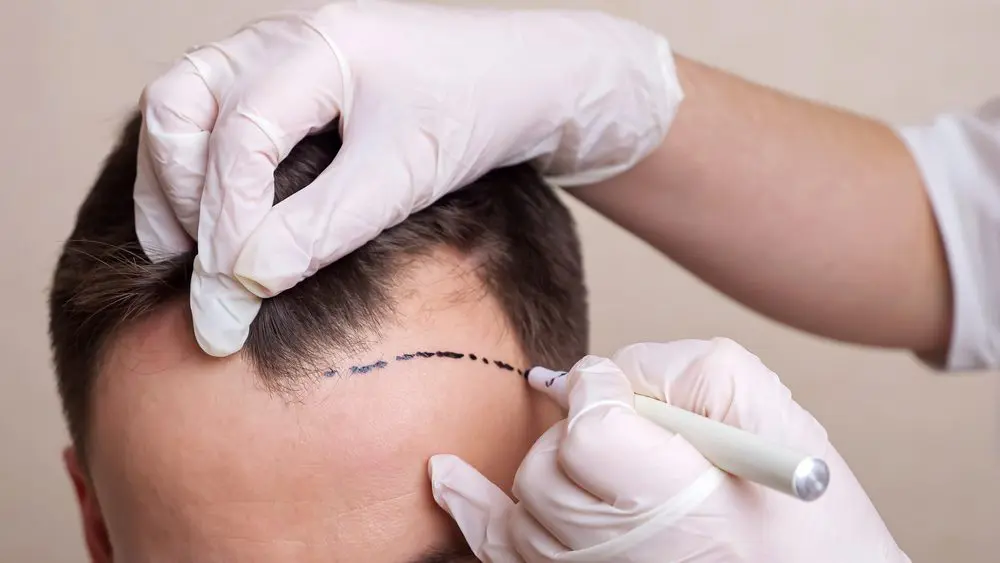
The beard design determines the outer borders of the beard, the distribution of density across different zones of the face, and the overall style and shape of the finished result. Your surgeon will consider your facial structure, the position of your jawline and cheekbones, your natural skin tone, and the beard style you are hoping to achieve. The design is marked out on the skin so that both you and the surgeon have a clear and agreed reference point before any work begins.
For patients with some existing facial hair, the design also needs to account for the natural growth patterns already present, ensuring that the transplanted hair will integrate seamlessly with what is already there. For patients starting from nothing, the surgeon has more freedom to design the beard from scratch, though the same principles of naturalness and suitability for the individual face apply.
You should feel entirely comfortable with the design before the procedure proceeds. If there is anything you are unsure about or would like to discuss further, this is the moment to do so. Once the extraction phase begins, significant changes to the plan become impractical.
Stage Four: Local Anaesthetic
Once the beard design has been agreed, local anaesthetic is administered to both the donor area and the beard area. This is done using a series of small injections and takes a few minutes to take full effect. The anaesthetic numbs both areas completely, meaning you should feel no pain during the extraction or implantation phases of the procedure.
Some patients find the administration of the local anaesthetic to be the most uncomfortable part of the entire process. The sensation is similar to any injection, and it passes quickly once the anaesthetic takes effect. If you are anxious about this stage, it is worth mentioning to your surgeon beforehand, as a mild oral sedative can be offered to help you feel more relaxed.
Once the anaesthetic is in place, you will be comfortable throughout the remainder of the procedure. Most patients find that they are able to watch television, listen to music, or simply rest during the hours that follow.
Stage Five: Donor Extraction
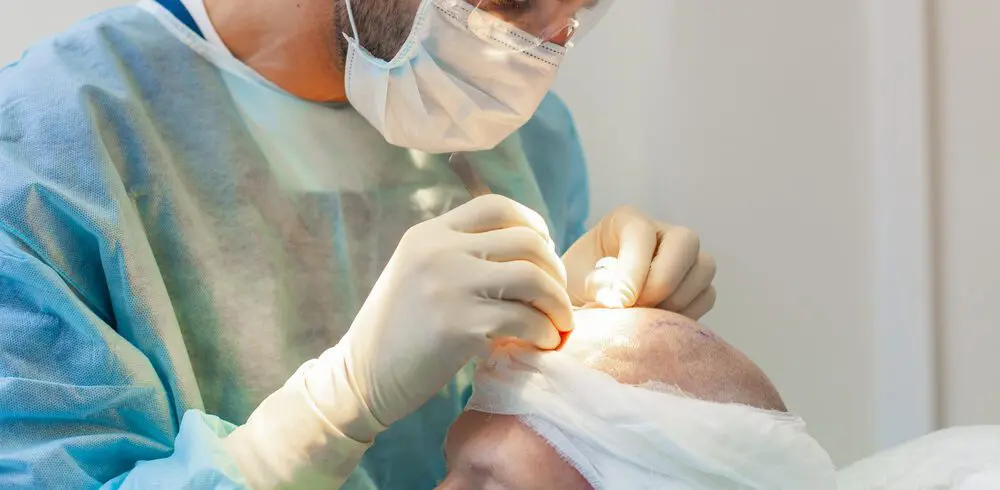
With the anaesthetic in place, the extraction phase begins. This involves removing individual follicular units from the donor area at the back and sides of the scalp using a small, precision punch tool. The tool creates a tiny circular incision around each follicle, allowing it to be gently lifted from the skin without damaging the surrounding tissue.
Each follicular unit typically contains between one and four hairs. The units are extracted one by one, distributed across the donor area to avoid creating any visible areas of thinning. The pattern of extraction is carefully planned to ensure that the donor site retains a natural appearance once the small puncture wounds have healed.
The extracted follicles are placed immediately into a holding solution that preserves their viability until they are ready to be implanted. Keeping the time between extraction and implantation as short as possible is an important part of maximising graft survival.
Stage Six: Recipient Site Creation
Once the required number of grafts have been extracted and prepared, the surgeon moves on to creating the recipient sites in the beard area. This is one of the most technically demanding stages of the procedure and one of the most important in terms of determining the naturalness of the final result.
Recipient sites are tiny incisions made in the skin of the beard area into which the grafts will be placed. Each site is created individually using a fine blade or needle, and the angle, direction, and depth of every incision is determined by the surgeon based on the beard design and the natural growth patterns of the surrounding hair.
The angle of each recipient site is particularly critical. Facial hair does not grow perpendicular to the skin. It lies at very specific angles that vary depending on where on the face it is growing, typically between 10 and 30 degrees from the surface of the skin. Replicating these angles precisely is what gives the finished beard its natural appearance. Grafts placed at the wrong angle will not lie flat against the skin in the way that natural facial hair does, which can make the result look unnatural even if the density and coverage are otherwise good.
The direction of each site is equally important. On different areas of the face, hair grows in different directions. On the cheeks, it typically grows downward and slightly outward. On the chin, it grows more directly downward. On the moustache area, the direction changes again. An experienced surgeon maps these directional patterns carefully and creates each recipient site to match them precisely.
The depth of each incision also matters. Sites that are too shallow may not hold the graft securely, while sites that are too deep can damage the surrounding tissue. Getting the depth right is a matter of surgical skill and experience, and it is one of the factors that distinguishes the results achieved by an experienced specialist from those of a less experienced practitioner.
Stage Seven: Graft Implantation
With the recipient sites created, the implantation phase begins. Each graft is carefully placed into its designated site using fine surgical instruments, with the root of the follicle positioned at the correct depth and the angle of the emerging hair shaft aligned with the incision.
This stage requires considerable patience and precision. Each graft is handled individually, and care is taken to avoid damaging the follicle during placement. The survival of each graft depends on how carefully it is handled throughout the extraction, preparation, and implantation process, and the implantation phase is where much of this care is concentrated.
For a full beard transplant involving a large number of grafts, the implantation phase can take several hours. For a smaller patchy beard procedure, it may be completed more quickly. Throughout this time, the patient remains comfortable under local anaesthetic and is free to rest, listen to music, or watch something on a screen.
By the end of the implantation phase, every planned graft has been placed and the procedure itself is complete. The total time from the patient arriving at the clinic to the procedure being finished typically ranges from four to eight hours for most beard transplants, with larger procedures occasionally running longer.
Stage Eight: Immediate Aftercare and Going Home
Once the procedure is complete, your surgeon and the clinical team will clean the treated areas and give you a thorough briefing on how to care for the graft sites during the first critical days of healing. This aftercare briefing is an important part of the process and should be listened to carefully, as the steps you take in the first few days after the procedure have a direct impact on graft survival and the quality of the final result.
You will typically be given a written set of aftercare instructions to take home with you, covering everything from how to sleep to what products to avoid and when you can return to normal activities. At Capital Hair Restoration, our team is also available to answer any questions that arise during your recovery, so you are never left feeling uncertain about what to do or what is normal.
Most patients are able to leave the clinic and travel home on the same day as the procedure. You will not be able to drive yourself, so it is important to arrange transport in advance. For patients travelling from outside London, making arrangements to stay nearby overnight is advisable, as a long journey immediately after the procedure is best avoided.
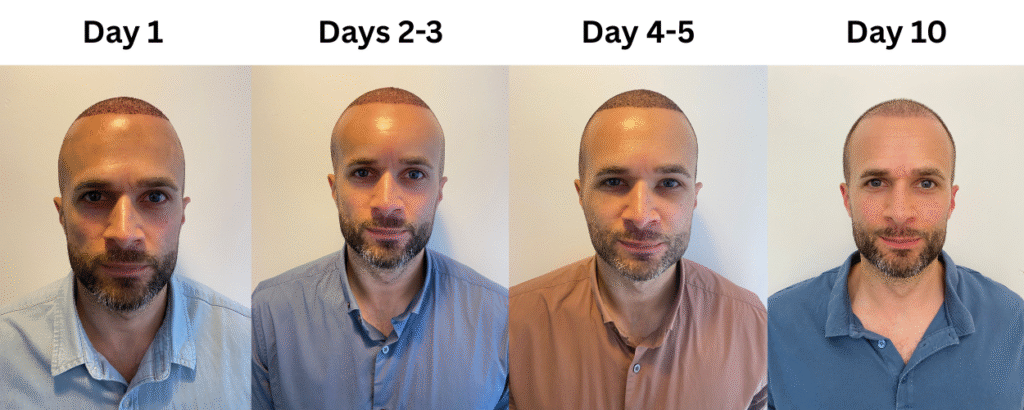
In the hours after the procedure, the treated areas will be slightly red and tender. The graft sites on the face will be visible as small raised points where each follicle has been placed. This appearance is temporary and settles significantly within the first few days. Most patients find that by day five to seven, the treated areas are calm enough that the procedure is not obviously visible to others.
Stage Nine: The Recovery Period
The recovery from a beard transplant unfolds over several weeks, and understanding what is normal at each stage helps to make the experience more manageable.
In the first two to three days, the priority is protecting the grafts. The newly placed follicles are not yet anchored securely in the skin and can be dislodged by friction, pressure, or trauma. You should avoid touching the graft sites, sleeping face down, or wearing anything that presses against the treated areas. Washing the face should be done very gently using the technique provided in your aftercare instructions.
From around day four or five, small scabs will have formed around each graft site. These are a normal part of the healing process and should be left to fall away naturally. Picking or scratching at the scabs risks dislodging the grafts beneath them, which can affect the final result. Most scabs clear naturally by around day ten.
From two to four weeks post-procedure, the transplanted hairs will begin to shed. This is the shock loss phase, and it is entirely normal. The follicles remain intact beneath the skin and will begin producing new hair growth from around three to four months. The shedding phase is one of the most commonly misunderstood parts of the beard transplant process, and patients who are not prepared for it can find it alarming. Knowing that it is coming and that it is a normal part of the process makes it considerably easier to manage.
How Does a Beard Transplant Work? Step-by-Step Guide
CHUNK 5 OF 5
Stage Ten: The Results Timeline
Understanding the results timeline is one of the most important parts of approaching a beard transplant with the right mindset. The procedure delivers permanent results, but those results take time to develop, and the journey from the day of surgery to the final outcome unfolds gradually over the course of a year.
Months one and two are the quietest in terms of visible progress. The transplanted hairs shed during this period, and there is little outward sign that anything has changed. This is the phase that requires the most patience, and it is the phase where having a clear understanding of the timeline in advance makes the biggest difference to how the patient experiences it.
From around three to four months, new hair growth begins to emerge from the transplanted follicles. The hairs at this stage are typically fine and soft, and the coverage may appear uneven or lighter than expected. This is completely normal and is simply a reflection of the early stage of the growth cycle. The hairs will continue to thicken and mature over the months that follow.
By six to eight months, the result is becoming much more visible. The transplanted hairs have thickened considerably, the density is more apparent, and the shape of the beard is clearly taking form. Most patients find this stage genuinely exciting, as the result they have been waiting for begins to emerge.
The final result, where the transplanted hair has fully matured to its permanent thickness and density, is typically seen at around the twelve-month mark. For some patients, particularly those with finer hair or those who have had a larger procedure, continued improvement may be visible beyond this point. At twelve months, the beard can be assessed in full, and any decision about whether further treatment is needed or desired can be made based on the complete picture.
Once established, the transplanted hair is permanent. It grows, behaves, and responds to shaving and styling exactly like natural facial hair, because it is natural facial hair. There is no ongoing maintenance required beyond normal grooming, and the result should remain stable indefinitely.
Next Steps
A beard transplant is a carefully planned process rather than a single procedure. From the initial consultation and beard design through to graft implantation, recovery, and final growth, every stage plays an important role in creating a natural-looking and long-lasting result.
Understanding how the procedure works before you begin helps remove much of the uncertainty that patients often feel when considering treatment. Knowing what happens at each step, what recovery involves, and how the results develop over time allows you to approach the process with realistic expectations and confidence.
While the procedure itself is completed in a single day, the final outcome is built gradually over the months that follow. Patients who understand the journey from consultation to full maturation are often the ones who enjoy the process most, because they know what to expect and appreciate the progress as it unfolds.
If you are considering a beard transplant, Capital Hair Restoration offers consultations across the UK, including Brentwood, Bristol, Bromley, Chelmsford, Ipswich, Milton Keynes, Oxford and Tunbridge Wells.
At Capital Hair Restoration, consultations focus on donor area assessment, beard design, graft planning, recovery expectations, and long-term natural results. Our experienced team will explain every stage of the process, answer your questions honestly, and help you understand exactly what is achievable in your individual case.
Book your consultation today and take the first step towards achieving the beard you’ve always wanted.


Book Your Free Hair Transplant Consultation
Fill in your details and we'll get in touch with you shortly.
Book your consultation
Blog sections


- « Previous
- 1
- …
- 6
- 7
- 8