


The difference between FUT and FUE hair transplants
The difference between FUT and FUE hair transplants
FUT vs FUE Hair Transplants: Understanding the Key Differences
For those experiencing hair loss, a hair transplant can be a transformative solution. Today, the two most established surgical options are Follicular Unit Extraction (FUE) and Follicular Unit Transplantation (FUT). Both offer highly effective and natural-looking results, but each comes with its own benefits, trade-offs, and ideal candidates.
“The right procedure isn’t about what’s most popular – it’s about what works best for your individual hair loss, goals, and lifestyle.”– Dr Chaudhry, Senior Surgeon, Capital Hair Restoration
If you’re considering restoring your hairline, understanding the differences between FUE and FUT will help you make a confident, informed decision that suits your hair type, lifestyle, and long-term goals.
“Choosing between FUT and FUE comes down to the balance between density, scarring, and personal styling preferences.”– Dr Rogers, Hair Transplant Specialist
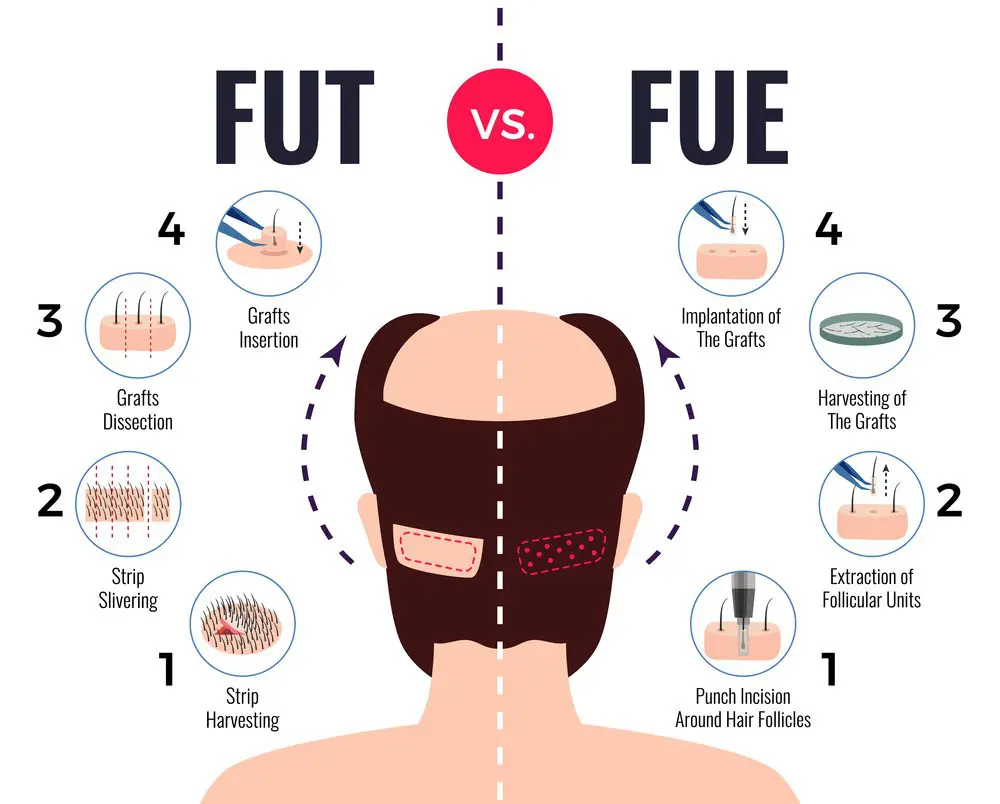
Methods of hair transplantation fut vs fue poster with infographic elements on white background vector illustration
What is a FUE Hair Transplant?
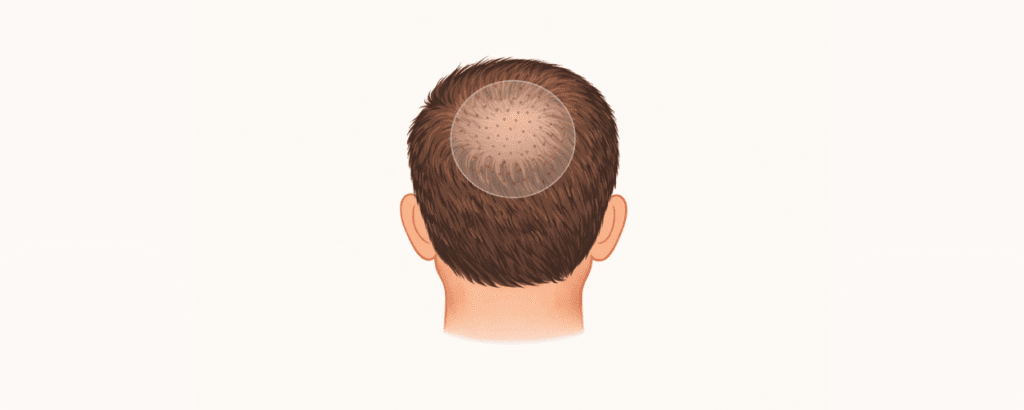
FUE (Follicular Unit Extraction) is a modern, minimally invasive technique that involves harvesting individual hair follicles directly from the donor area – typically the back and sides of the scalp – and implanting them one by one into thinning or balding areas.
Unlike traditional strip (FUT) surgery, FUE does not require any incisions or stitches, making it ideal for those looking for faster recovery and minimal visible scarring.
“FUE gives our patients the flexibility they want – no stitches, minimal scarring, and a fast return to everyday life.”– Dr Williams, Senior Surgeon, Capital Hair Restoration
How Does a FUE Hair Transplant Work?
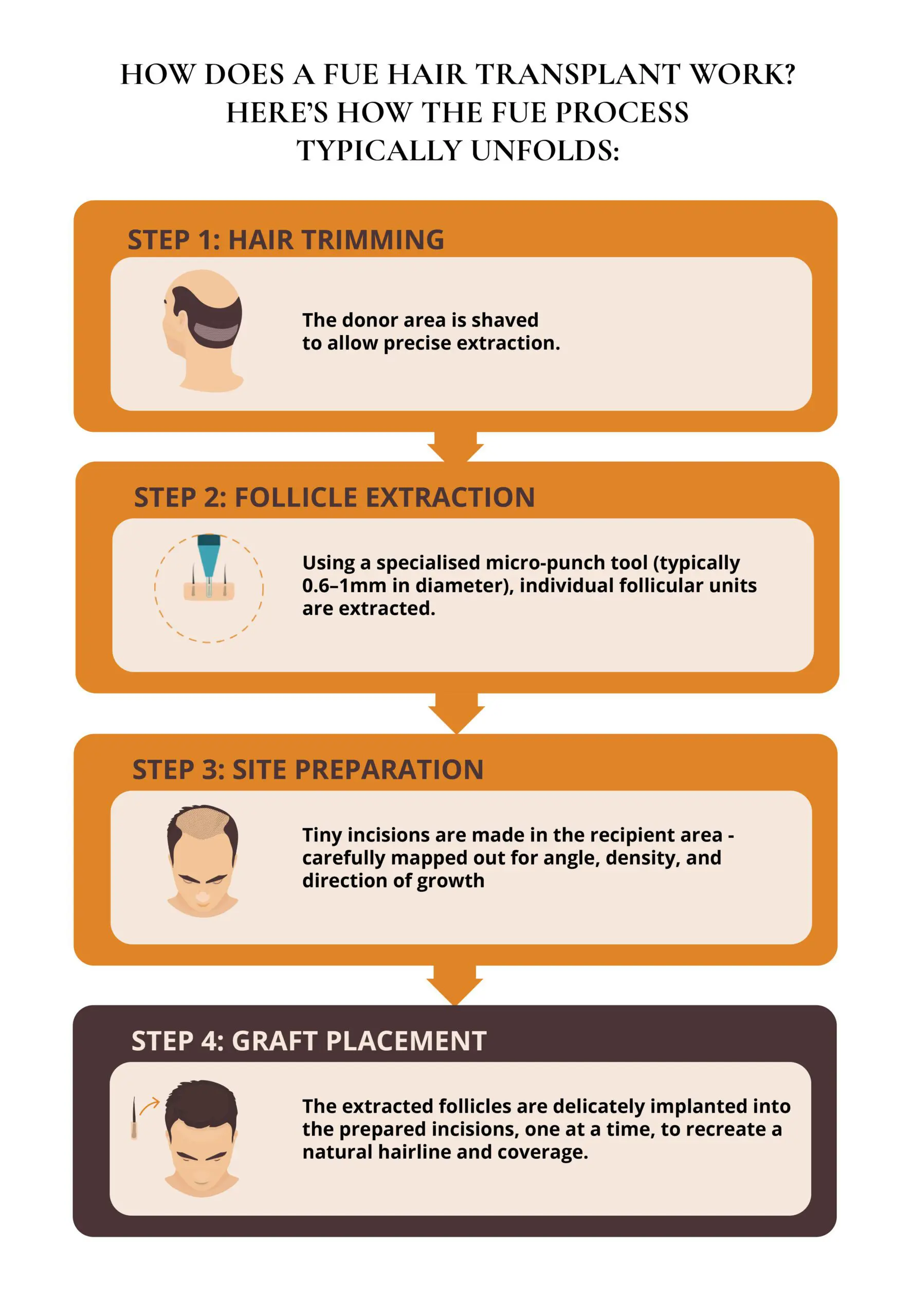
Here’s how the FUE process typically unfolds:
1. Hair Trimming
The donor area is shaved to allow precise extraction.
2. Follicle Extraction
Using a specialised micro-punch tool (typically 0.6–1mm in diameter), individual follicular units are extracted.
3. Site Preparation
Tiny incisions are made in the recipient area, carefully mapped out for angle, density, and direction of growth.
4. Graft Placement
The extracted follicles are delicately implanted into the prepared incisions, one at a time, to recreate a natural hairline and coverage.
Benefits of an FUE Hair Transplant
- No linear scar – only small, dot-like marks, often undetectable once healed
- Faster healing – most clients return to normal activity in a few days
- Minimal discomfort – less post-op pain than FUT
- Body hair grafts are possible – in certain cases, beard or chest hair can be used
- Ideal for short hairstyles – no visible scarring if hair is closely cropped
- Typically more affordable than FUT – due to simpler logistics and faster turnaround in many clinics, due to the less surgical nature of the procedure, etc
Drawbacks of an FUE Hair Transplant
- More time-consuming – the meticulous nature of the procedure often means longer surgery time.
- Requires shaving – either a partial or full shave is usually needed, which may be a consideration for some clients
FUE Recovery & Results Timeline
Most patients are able to resume non-strenuous activities within 3 to 5 days after FUE surgery. Because this technique involves tiny micro-punch incisions rather than a linear cut, healing is typically faster and more comfortable than with FUT.
“The first few days are key—rest, hydrate, and avoid touching the area. It’s about giving those grafts the best possible chance to settle in.”– Darryl King, CEO, Capital Hair Restoration
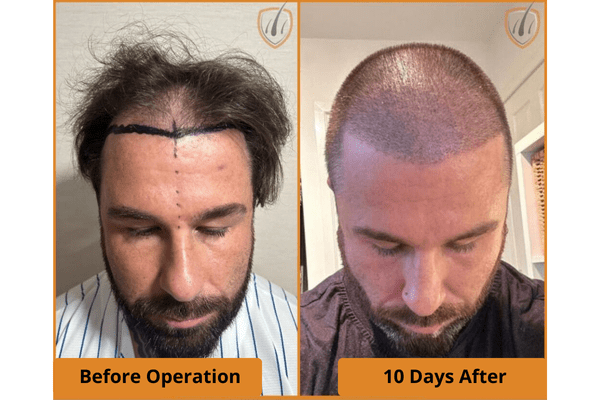
FUE Recovery & Growth Milestones
✅ Days 1–3
Mild swelling, redness, and scabbing may appear. Avoid physical exertion and follow the aftercare plan closely.
✅ Days 4–7
Scabs begin to fall off naturally. Redness fades. You can usually return to work and light exercise.
✅ Day 10
Grafts are fully settled. You can begin gentle washing and return to more normal routines.
✅ Month 3
Early regrowth begins. Some shedding (“shock loss”) is normal and temporary.
✅ Months 6–9
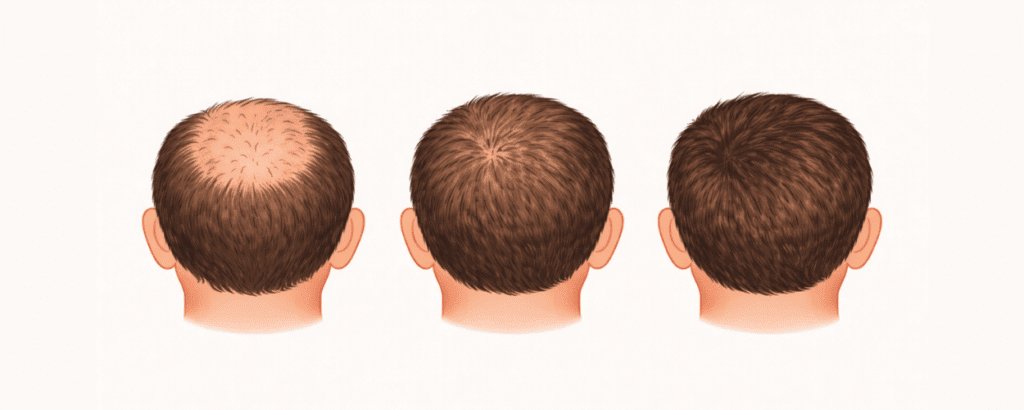
Substantial hair growth becomes visible. Density improves, and the new hair begins blending with the native hair.
✅ Months 12–18
Final results are taking shape, with full density and natural texture. You can enjoy haircuts, styling, and even close-cropped looks with no visible scarring.
“FUE recovery is often underestimated—it may seem ‘easy,’ but those early days still require precision and patience. What you do in the first two weeks sets the tone for long-term success.”– Steven Ambrose, Head Consultant, Capital Hair Restoration
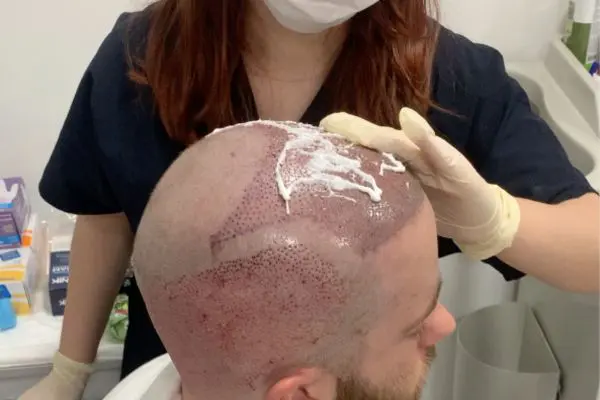
What is a FUT Hair Transplant?
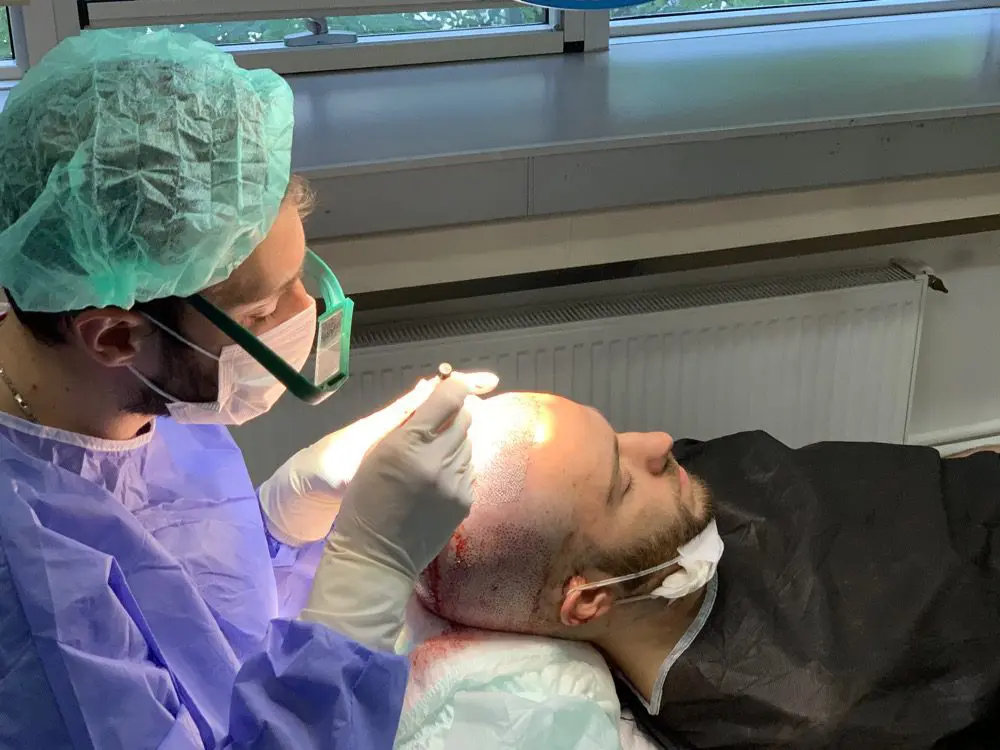
FUT (Follicular Unit Transplantation), sometimes referred to as the “strip method”, is a more traditional technique that involves removing a thin strip of skin from the donor area – typically the back of the scalp – to harvest follicular units. These follicle groupings are then meticulously prepared and implanted into areas affected by thinning or baldness.
FUT was especially popular among patients who require a high number of grafts in a single session and are less concerned about the visibility of a linear scar. However, modern FUE methods can now transplant more grafts than FUT.
“For patients with longer hair or those who prefer not to shave their donor area, FUT can provide excellent results with minimal disruption. This is the only benefit of FUT over FUE.”– Dr Chaudhry, Consultant Surgeon
How Does a FUT Hair Transplant Work?
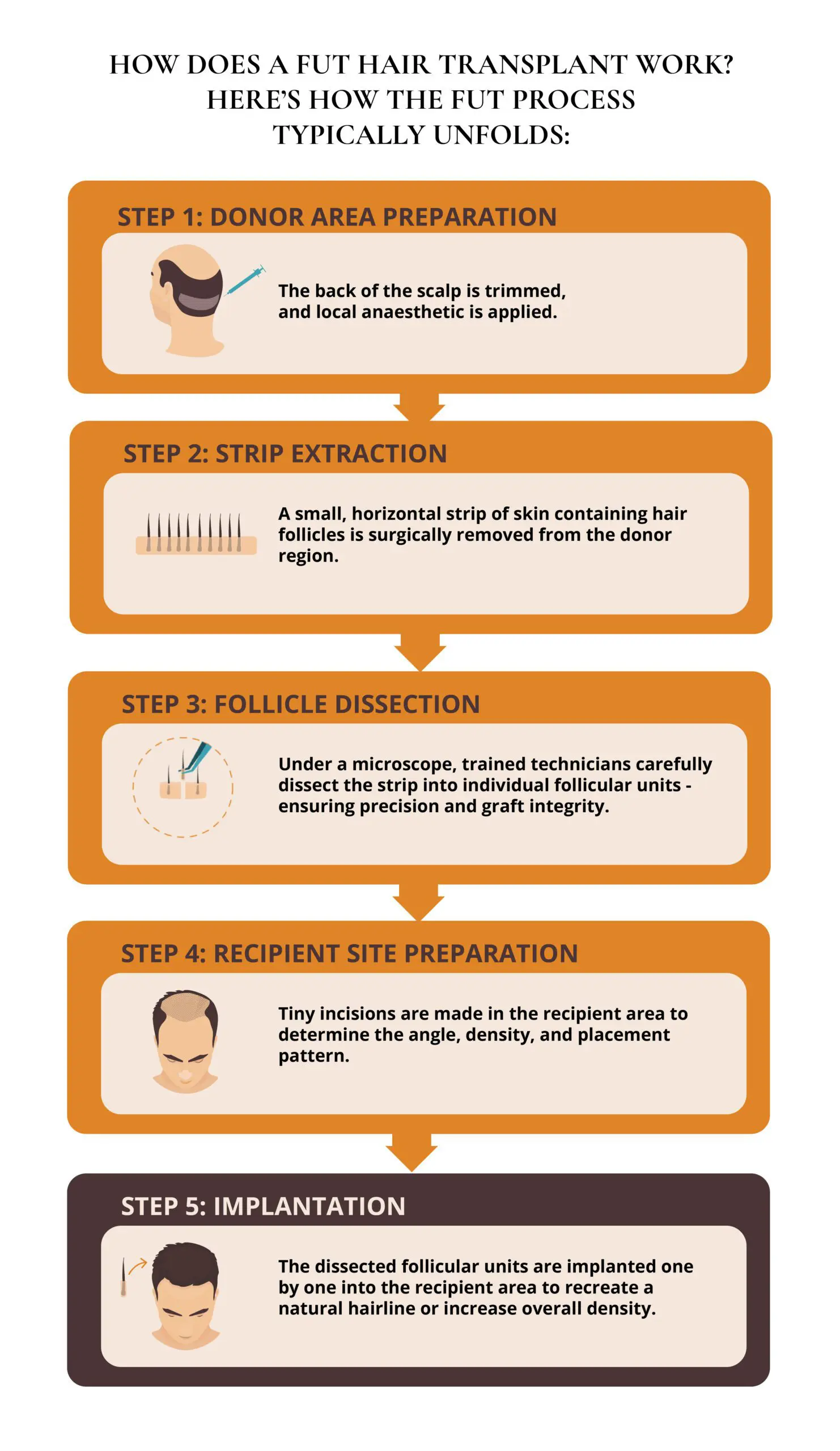
The FUT procedure typically follows these steps:
- Donor Area Preparation
The back of the scalp is trimmed, and local anaesthetic is applied. - Strip Extraction
A small, horizontal strip of skin containing hair follicles is surgically removed from the donor region. - Follicle Dissection
Under a microscope, trained technicians carefully dissect the strip into individual follicular units – ensuring precision and graft integrity. - Recipient Site Preparation
Tiny incisions are made in the recipient area to determine the angle, density, and placement pattern. - Implantation
The dissected follicular units are implanted one by one into the recipient area to recreate a natural hairline or increase overall density.
Benefits of a FUT Hair Transplant
- High graft yield – Suitable for patients requiring significant coverage in one session (Although modern FUE methods can now produce the same/more grafts than FUT)
- No need to shave the donor area – Ideal for those with longer hairstyles
- Shorter surgery time – Compared to FUE, the extraction process is faster
- Proven technique – Decades of use with consistent, reliable results
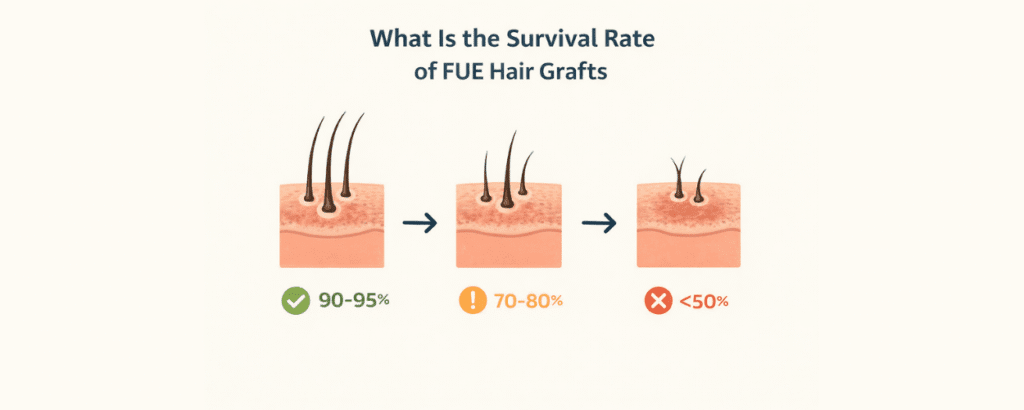
- High survival rate – Follicles are less exposed during extraction, aiding in graft quality
Drawbacks of a FUT Hair Transplant
- Linear scar – A visible scar remains in the donor area (though easily covered with longer hair)
- Longer healing time – Compared to FUE, FUT typically involves more downtime
- Post-surgical discomfort – Stitches or staples are required and may cause temporary tightness or soreness.
- Not ideal for short haircuts – The scar can be visible if hair is clipped very short.
FUT Recovery & Results Timeline
Most patients are able to resume non-strenuous daily activities within 10–14 days post-surgery. Full healing of the donor area takes longer due to the incision and sutures, which are usually removed after 7–10 days.
“The first 10 days are crucial – follow the aftercare plan closely and your results will thank you.”– Selina Wong, Client Relations Manager, Capital Hair Restoration
- Visible results begin around the 3-month mark
- Substantial growth is usually seen by 6–9 months
- Final results are typically visible by 12–18 months
As with FUE, it’s critical to follow detailed aftercare instructions during the initial two weeks to avoid complications and maximise graft survival.
“Post-operative care plays a bigger role than most patients realise. Graft survival depends on how well you protect and nourish the scalp in those early days.” – Steven Ambrose, Head Consultant
FUT vs FUE Hair Transplants: A Side-by-Side Comparison
Still unsure which method is right for you? Use the table below to quickly compare the key differences between FUT and FUE hair transplant techniques.
| Feature | FUT (Follicular Unit Transplantation) | FUE (Follicular Unit Extraction) |
| Procedure Time | 3–8 hours | 4–9 hours |
| Technique | Strip of scalp is removed and follicles are dissected | Individual follicles are extracted one by one |
| Scarring | Linear scar at the back of the head | Tiny dot-like scars scattered across donor area |
| Recovery Time | 2–3 weeks | 5–10 days |
| Donor Area Shaving | Not required | Required (full or partial) |
| Ideal For | Large graft sessions, longer hair wearers | Minimal scarring, short hairstyles, (small or large graft sessions) |
| Graft Yield | High (thousands in one session) | Medium to high, depending on personal needs time and tools |
| Discomfort Post-Op | Slightly higher due to sutures | Typically lower, no stitches required |
| Cost | Starts from £3,495 | Starts from £3,495 |
Your choice will depend on your hair loss stage, recovery preferences, hairstyle goals, and personal comfort.
Post-Transplant Care: What to Expect in the First 10 Days
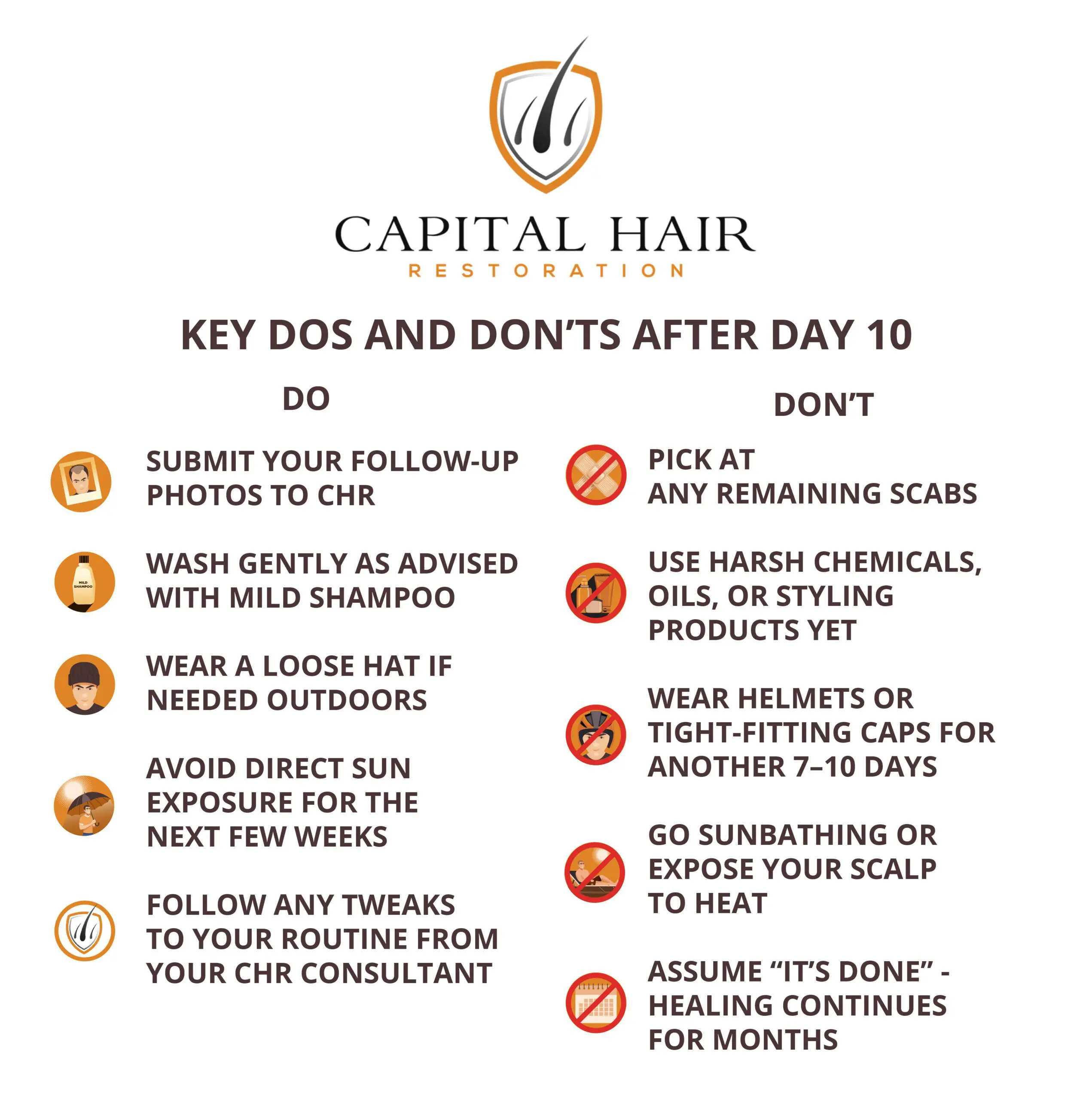
Whether you choose FUT or FUE, the first 10 days after your hair transplant are absolutely critical for protecting your new grafts and supporting long-term success. This is when the follicles are at their most fragile – and when your aftercare discipline matters most.
General Aftercare Guidelines:
- Avoid sweating and heat – No gyms, saunas, or strenuous activity for at least 10 days
- Keep scalp clean – Follow our recommended wash routine with the provided shampoo
- No scratching – Itching and scabbing are normal, but resist the urge to pick or touch
- Sleep with head elevated – Use extra pillows or a travel neck cushion to reduce swelling and prevent rubbing
- Stay out of the sun – Protect the scalp from direct sunlight to avoid irritation and graft damage
- No smoking or alcohol – Both can impair healing and graft survival
- Hat caution – Wear only loose-fitting, non-abrasive hats after day 7–10
By Day 10, most scabs should begin to fall off naturally, and some mild shedding of the transplanted hairs may occur – this is completely normal and part of the process. Don’t panic: the follicles remain in place and will begin producing new hair within a few months.
Frequently Asked Questions (FAQ’s)
Which is better: FUE or FUT hair transplant?
There’s no one-size-fits-all answer – the best method depends on your goals, lifestyle, and hair loss stage.
- FUE is ideal if you want minimal scarring and the flexibility to wear short hairstyles. It’s also preferred by clients who want a quicker, less invasive recovery.
At Capital Hair Restoration, your consultation will include a personalised recommendation based on your scalp, hair type, and desired outcome.
Which is cheaper: FUE or FUT hair transplant?
While both procedures at Capital Hair Restoration start from £3,495, FUE is generally more cost-effective. That’s because:
- FUE doesn’t require a full surgical team.
- FUE is slightly less invasive and doesn’t require as much surgical intervention.
However, if you require a very high number of grafts, FUT may offer better density per session – which could reduce the need for multiple surgeries.
Please Note: Capital Hair Restoration can provide FUE options with higher graft numbers than FUT.
How long does it take to heal after a hair transplant?
- FUE: Most clients heal within 7–14 days, with little visible evidence after two weeks.
- FUT: Recovery takes 3–4 weeks, mainly due to the incision and stitches in the donor area.
Regardless of the method, you’ll be able to return to work within a few days to a week, depending on your job and comfort level. Manual labour or jobs involving dusty, dirty environments or heavy lifting should be avoided for two weeks. Most people who can work from home can commence work the day after an FUE procedure.
Will I experience shedding after a hair transplant?
Yes – and it’s completely normal. This process is called “shock loss” and typically occurs between 2 to 4 weeks post-surgery. You may notice the transplanted hairs falling out – but rest assured, the follicles remain in place and will regrow new hairs in the coming months.
Can I exercise 10 days after a hair transplant?
Light walking is usually fine after a few days, but strenuous exercise, weightlifting, and cardio should be avoided for at least 14 days. Sweat, pressure, and increased blood flow can disrupt the delicate grafts.
Does a hair transplant leave scars?
- FUE: Leaves only tiny dot-like scars that are barely noticeable, even with short hairstyles.
- FUT: Leaves a thin linear scar at the back of the scalp, usually hidden under longer hair.
Our surgeons use advanced techniques to minimise scarring and promote clean healing, no matter the method. We will use the smallest possible punch sizes for FUE, typically 0.6-1mm depending on the hair type and hair density.
When will I see results after a hair transplant?
You’ll begin to see visible growth around month 3, with noticeable changes between months 4–9. Final results often appear between 12 and 18 months, especially in crown or high-density areas.
How should I care for my scalp after a transplant?
Follow your post-op instructions carefully:
- Wash gently with prescribed shampoo
- Avoid pressure, scratching, or harsh products
- Moisturise and protect the area as instructed
Our team provides a full aftercare pack and regular check-ins throughout your recovery.
Why Choose Capital Hair Restoration?
Choosing between FUT and FUE is just one part of your hair restoration journey – but choosing the right clinic is even more important.
At Capital Hair Restoration, we don’t believe in one-size-fits-all solutions. Every client receives a fully personalised consultation, clear guidance, and complete transparency from day one. Whether you’re opting for a surgical transplant or exploring non-surgical options, our expert team is with you at every step – from your first inquiry to your final result.
What Sets Us Apart?
Expert-Led Care
Our highly trained surgeons have years of specialised experience in both FUE and FUT techniques, ensuring you receive treatment tailored to your goals, scalp type, and lifestyle.
Advanced Technology
We invest in the latest surgical tools and hair restoration innovations to ensure precision, speed, and the most natural-looking outcomes possible.
Multiple Locations
Whether you’re based near London, Manchester, Essex, or opting for our All Inclusive Hair Transplant package in Turkey, you’ll have access to the same high-quality support, clinical oversight and any of our local pre and post op offices throughout the UK
Natural Hairline Design
We focus on more than just density – our team is skilled in aesthetically mapping natural hairlines that complement your face shape and age, resulting in seamless, believable outcomes.
Discreet & Flexible Scheduling
We offer weekday, weekend, and remote consultation options, so you can get expert advice on your own time – with no pressure to commit.
Ongoing Aftercare
Your transplant doesn’t end when you leave the clinic. We provide structured follow-up care, regular check-ins, and personalised feedback throughout your recovery and regrowth timeline.
What Our Clients Say
“From the first call to my final review, the Capital team made me feel supported, informed, and genuinely listened to. I couldn’t be happier with my results – I just wish I had done it sooner.”
– Michael, 38, FUE Client
“I chose FUT because I needed a lot of grafts and didn’t want to shave my donor area. Capital made the entire process easy, and my scar is invisible under my hair after a few months.”
– Stephen, 45, FUT Client
Your Next Step
Choosing between FUT and FUE is not about selecting the most popular procedure. It is about understanding which option is best suited to your hair loss pattern, donor area, hairstyle preferences, recovery expectations, and long-term goals.
While FUE has become the preferred choice for most patients due to its minimal scarring and faster recovery, FUT can still be a suitable option in certain cases. The most important step is receiving expert advice tailored to your individual circumstances rather than relying on general guidance alone.
At Capital Hair Restoration, every consultation is designed to help you make an informed decision with complete clarity and realistic expectations.
During your consultation, we will:
- Assess your hair loss pattern and donor area
- Explain the advantages and limitations of both FUT and FUE
- Discuss graft requirements, density goals, and recovery expectations
- Show real patient results from similar cases
- Create a personalised hair restoration plan based on your goals and lifestyle
Consultations are available across the UK, including Harley Street, London, Chelmsford, Cambridge, Guildford, Reading, Watford, Portsmouth, and Southampton.
A successful hair transplant starts long before the day of surgery. It begins with understanding your options, asking the right questions, and choosing a treatment plan that will continue to look natural for years to come. Whether FUT or FUE is the better solution for you, our team can help you make that decision with confidence.
Book your free consultation today and discover which hair transplant technique is most suitable for your hair loss, lifestyle, and long-term restoration goals.


Book Your Free Hair Transplant Consultation
Fill in your details and we'll get in touch with you shortly.