


Your First 10 Days After a Hair Transplant: What to Expect, How to Heal, and When It Gets Easier
Your First 10 Days After a Hair Transplant: What to Expect, How to Heal, and When It Gets Easier
A Patient-Focused Guide from Capital Hair Restoration
A hair transplant is a life-changing decision, and what happens after the procedure is just as important as the surgery itself. The first 10 days post-op are crucial for protecting your new grafts, avoiding complications, and laying the foundation for a successful outcome.
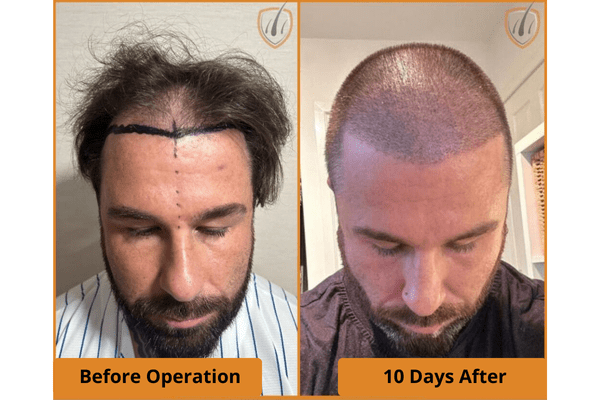
At Capital Hair Restoration, we support our patients every step of the way. This guide will walk you through what to expect day-by-day – with real stories, expert guidance, and tips to keep your recovery smooth.
What to Expect After the Procedure
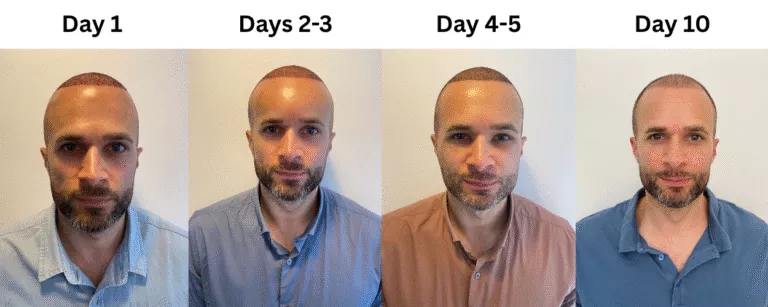
Day 1: Post-Procedure Recovery Begins
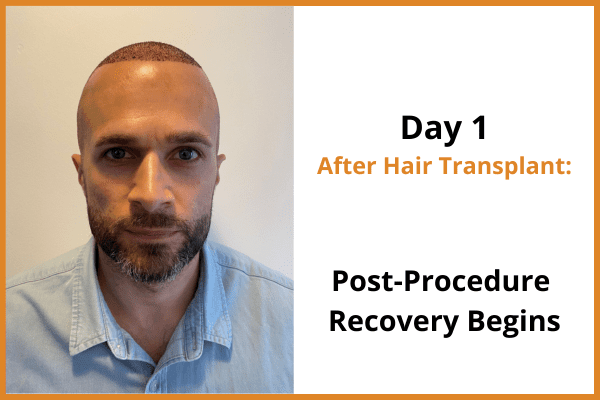
Immediately after your procedure, you’ll feel tired but relieved – The hard bit is now done!
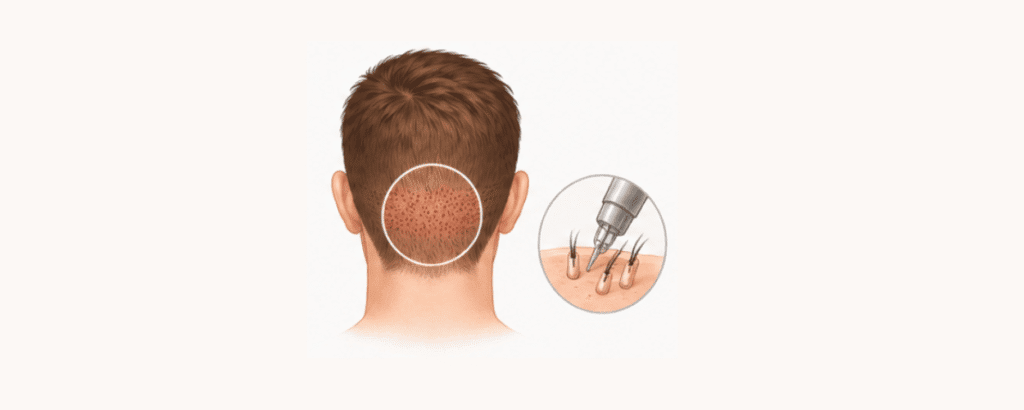
Your donor area (typically the back or sides of your head) will feel tight, and the recipient area (where the hairs were placed) will look red and bumpy.
You’ll leave the clinic with:
- A head bandage or wrap covering the donor area
- Painkillers and anti-inflammatories
- Saline spray to keep the grafts hydrated
- Full aftercare instructions and CHR contact support
Pain Level: Mild to moderate tenderness. Most describe it as “a tightness” or dull ache rather than sharp pain.
“I felt groggy the first night, but there was no pain. The hardest part was sleeping on my back with the neck pillow – but it made me feel like I was doing it right.”- Chris, 38, London (FUE)
Day 2–3: Swelling + Sleep Adjustments
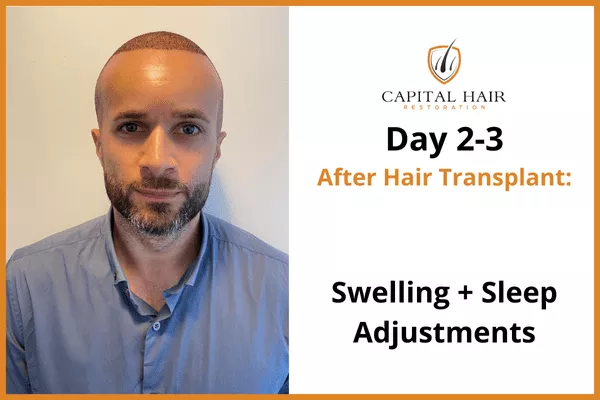
Swelling can increase slightly around the forehead and eyes. It’s important to:
- Avoid bending forward or lifting heavy objects
- Sleep slightly elevated (2 pillows or travel pillow)
- Spray saline every 2-3 hours during the day
Most patients stay off work these first few days or work from home. Avoid screen time for long stretches – dry eyes can worsen swelling.
Pain Level: Low – tightness is more noticeable than pain. Discomfort managed well with paracetamol or ibuprofen.
“The swelling surprised me – by day 3 It looked like I’d been in a boxing match. But by day 5, it had all gone. No pain, just weird pressure in my forehead.”– Liam, 42, Brighton (Turkey trip with CHR)
Day 4–5: First Wash + Scab Formation
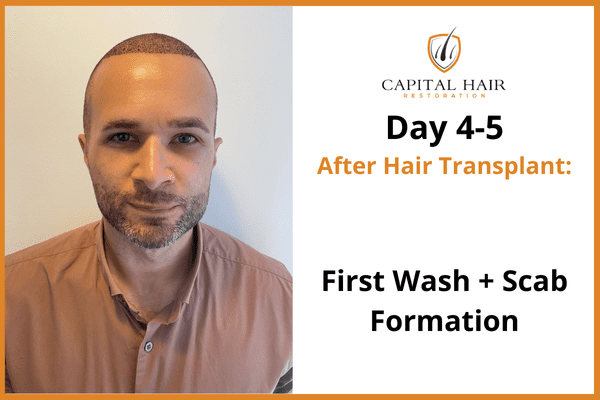
CHR patients are guided through their first hair wash either at the clinic (if abroad) or at home with support.
By now, tiny scabs form around the grafts – this is normal. You should:
- Start gentle washing with the provided shampoo
- Dab, don’t rub – avoid dislodging grafts
- Continue saline spray and medication
The donor area begins to feel itchy or tight as it heals – this is a good sign, but scratching is strictly off-limits.
Days 6–10: Visible Healing, Scab Shedding & Turning the Corner
By the time you reach Day 6, your scalp will start to feel less sensitive. The tightness in the donor area should ease, and the recipient area will feel more “settled” – although you’ll still see scabbing, it now begins to shed gradually, revealing new skin beneath.
What’s Normal at This Stage:
- Scab Shedding: The tiny crusts around each graft should fall away on their own during gentle washing – don’t pick or scrub.
- Shock Loss: Some of the hairs transplanted may begin to fall out – this is called shock loss, and it’s entirely normal. The follicles remain underneath and will soon begin a new growth cycle.
- Mild Redness: Especially if you have fair skin, some redness in the recipient area can linger up to Day 10 or even longer. This will fade.
“On Day 7, I washed my hair gently and was shocked to see so many hairs in the sink – I panicked. CHR assured me this was the normal shedding phase, and that the real growth was still to come.”– Max, 35, Cardiff (FUT procedure)
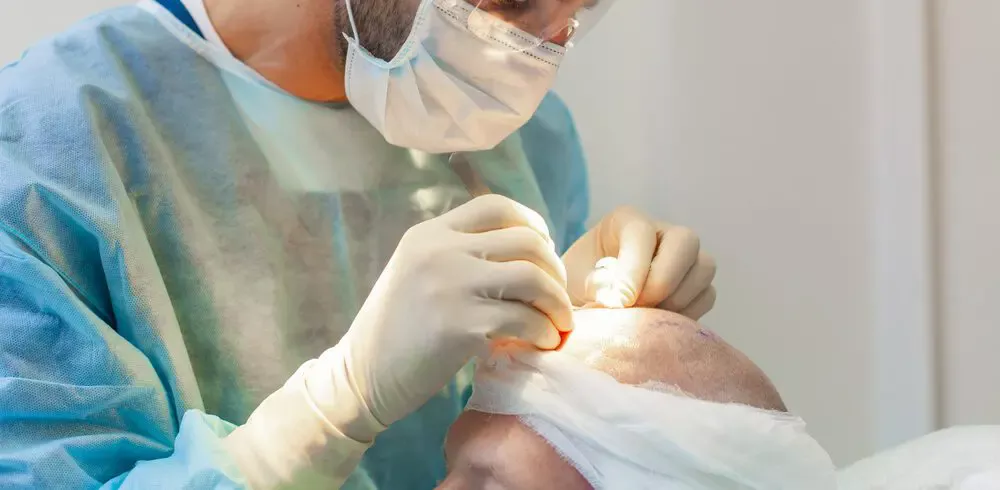
Routine for Days 6–10
Morning:
- Light saline spray if instructed
- Gentle shampoo using a cupped hand – no direct pressure
- Air dry – avoid hair dryers or towels
Daytime:
- Avoid sun exposure – wear a loose-fitting hat if required
- No gym, swimming, or strenuous activity yet
- Keep hydrated and eat well to support recovery
Evening:
- Continue sleeping with head slightly elevated
- Avoid sleeping on your stomach or sides if possible
“I had my transplant in Istanbul with CHR, and when I got home, the follow-up was just as strong as the care abroad. I sent pictures on Day 6 and got reassurance right away.” – Aman, 40, Birmingham (Turkey package)
Day 10: A Milestone in Healing
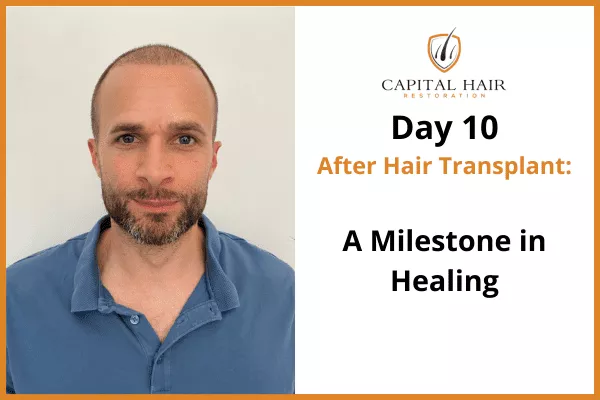
By Day 10, most patients feel comfortable, mobile, and confident in their recovery. You should notice:
- Scabs are 90–100% gone
- Any residual swelling has faded
- Grafts are now securely anchored in the scalp
- Mild tingling, tightness or numbness may persist but is fading
It’s time to submit your 10-day follow-up photos to your CHR consultant. They’ll check for:
- Graft stability
- Proper healing in both donor and recipient areas
- Signs of infection, irritation or dryness
This check-in often comes with a clear thumbs-up – or tailored advice to adjust shampooing, hydration, or activity levels.
“I sent my Day 10 photos through and got a voice note reply within the hour. Knowing someone was still checking in after I left the clinic made me feel genuinely cared for.”– Karl Dunbar Watson, CHR client
Ten Days After the Hair Transplant: What Now?
By Day 10, you’ve officially made it through the most sensitive and important part of your recovery. The grafts are now secure, the donor area is healing well, and you’ve likely established a daily routine that supports your scalp health.
But the journey doesn’t end here – it’s just the beginning of your long-term transformation.
What Comes Next?
Shedding Phase (Week 2–4)
Most of the transplanted hairs will fall out in the weeks after your 10-day milestone. This can feel alarming, but it’s completely normal – the follicles remain under the skin and will enter a resting phase before sprouting new hair.
“I thought I’d ruined it when all the hairs fell out. CHR explained it was ‘shock loss’ – and they were right. By month four, I started seeing new growth like clockwork.”– Daniel Thompson, CHR patient
Regrowth Timeline
- Months 3–4: First signs of fine hair regrowth appear.
- Months 5–8: Growth speeds up, especially at the hairline and crown.
- Months 9–12: Final results begin to show. Hair thickens, matures, and blends naturally with existing strands.
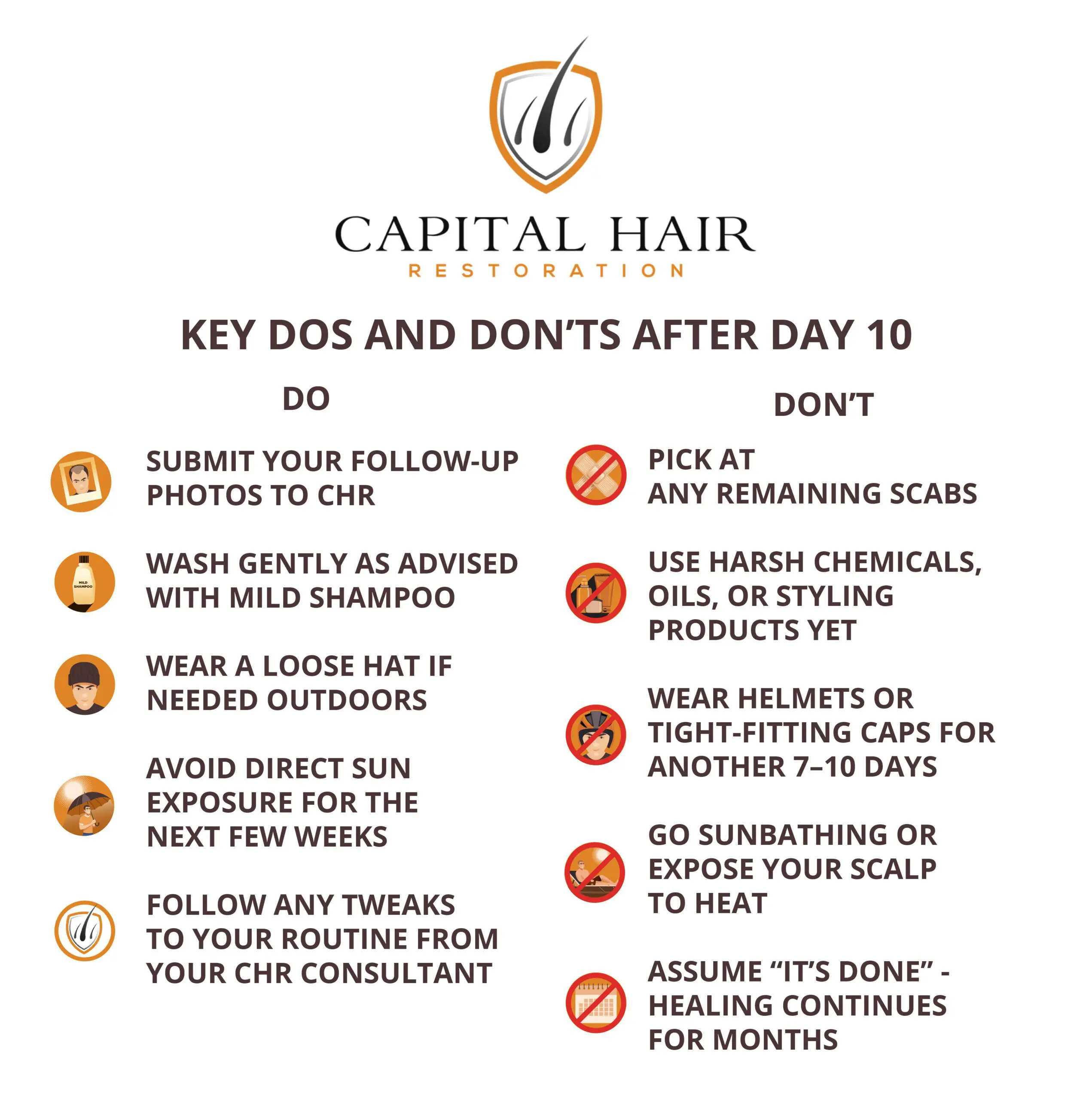
Key Dos and Don’ts After Day 10
“It’s the subtle things that help most – like how to angle the shower, how to stop itching, or when to moisturise. CHR’s team walked me through all of that.”– Matty Moffatt, CHR client
When to Be Concerned After the Hair Transplant
While most patients heal without issues, keep an eye out for:
- Persistent redness or swelling beyond 2 weeks
- Pus, discharge, or bad odour from graft areas
- Excessive pain or tenderness that doesn’t fade
- Raised scabs or signs of ingrown hairs
If you notice any of the above, contact your CHR consultant immediately. Our team is available 7 days a week to help assess, advise, and support.
Final Thoughts

The 10-day follow-up is more than a checkpoint – it’s your confirmation that the foundation is set. Your grafts are in place, your healing is underway, and with continued care, your results are just months away.
With Capital Hair Restoration, you’re never left guessing. From Day 1 to Month 12, you’re supported by a UK-based team that understands not just the science, but the emotional investment too.
Your Next Step
The first 10 days after a hair transplant are often the period patients worry about most. Questions about swelling, scabbing, sleeping, washing, exercise, and whether everything is healing correctly are completely normal. Fortunately, for most people, recovery is far smoother than expected when the right aftercare plan is followed.
At Capital Hair Restoration, our support does not end when the procedure is complete. We believe that outstanding aftercare is one of the most important parts of achieving a successful result. From your first day of recovery through to your final result, our team remains available to guide, reassure, and support you at every stage.
During your consultation, we will:
- Assess your hair loss and donor area
- Explain the full recovery timeline from Day 1 to Month 12
- Discuss what to expect during the crucial first 10 days
- Provide personalised aftercare guidance based on your lifestyle and routine
- Create a treatment and recovery plan tailored to your goals
Consultations are available across the UK, including Harley Street, London, Chelmsford, Cambridge, Guildford, Reading, Watford, Portsmouth, and Southampton.
A successful hair transplant is not simply about the day of surgery. It is about protecting your grafts, supporting healing, and ensuring every stage of recovery progresses as expected. With the right preparation and ongoing support, most patients find the first 10 days pass quickly and confidently.
Book your free consultation today and learn exactly what to expect before, during, and after treatment, including how to make your recovery as smooth and comfortable as possible.

Book Your Free Hair Transplant Consultation
Fill in your details and we'll get in touch with you shortly.