

Can You Have an FUE Hair Transplant with a Weak Donor Area?
Can You Have an FUE Hair Transplant with a Weak Donor Area?

Can You Have an FUE Hair Transplant with a Weak Donor Area?
One of the most common concerns patients have when considering treatment is whether they can have an FUE hair transplant with a weak donor area.
The donor area plays a critical role in the success of an FUE hair transplant. It provides the hair follicles that are used to restore thinning or balding areas.
If the donor area is weak, meaning it has lower density or thinner hair, it can affect what is possible in terms of coverage and final results.
However, having a weak donor area does not always mean that an FUE hair transplant is not an option. In many cases, a tailored approach can still achieve a natural and worthwhile result.
Understanding how donor area quality affects FUE hair transplant suitability helps you set realistic expectations and make an informed decision.
Key Takeaway: FUE Hair Transplant Weak Donor Area
- Donor area quality directly affects graft availability
- A weak donor area does not automatically rule out FUE
- Results may need to be more conservative
- A personalised assessment is essential
What Is a Weak Donor Area?
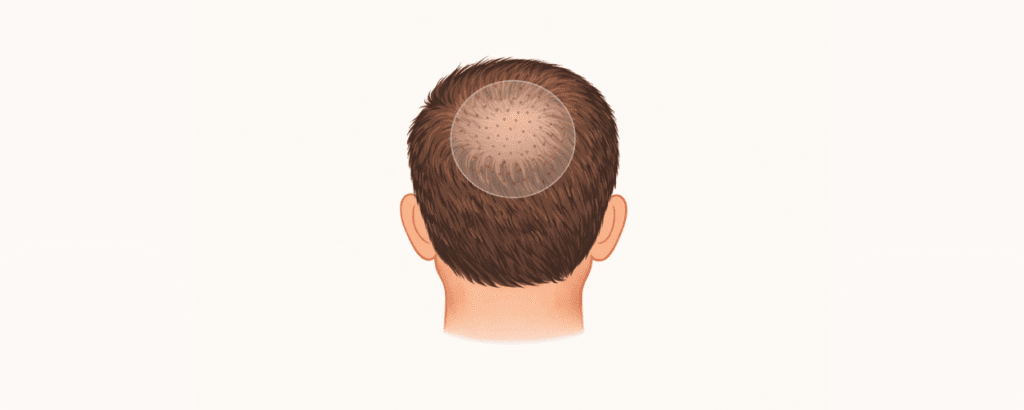
A weak donor area refers to a part of the scalp where hair density or quality is lower than ideal for an FUE hair transplant.
The donor area is usually located at the back and sides of the head, where hair is more resistant to hair loss.
A strong donor area typically has:
- High density of hair follicles
- Thick, healthy hair
- Even distribution across the scalp
In contrast, a weak donor area may have:
- Lower density (fewer follicles per cm²)
- Fine or thin hair
- Uneven distribution of hair
These factors reduce the number of grafts that can be safely extracted without causing visible thinning.

Why the Donor Area Matters in an FUE Hair Transplant
An FUE hair transplant works by redistributing existing hair rather than creating new hair.
This means:
- The number of grafts available is limited
- Each graft must be used carefully
- The donor area must be preserved for long-term results
If too many grafts are taken from a weak donor area:
- The back and sides of the scalp may appear thin
- The result may look uneven
- Future procedures may not be possible
This is why donor management is one of the most important parts of planning an FUE hair transplant.
Can You Still Have an FUE Hair Transplant with a Weak Donor Area?

In some cases, it is still possible to have an FUE hair transplant with a weak donor area.
However, the approach needs to be adjusted.
This may involve:
- Using fewer grafts
- Focusing on smaller, high-impact areas such as the hairline
- Prioritising natural appearance over full coverage
The goal is not to maximise graft numbers, but to achieve a balanced and realistic result.
For example, rather than attempting full scalp coverage, treatment may focus on:
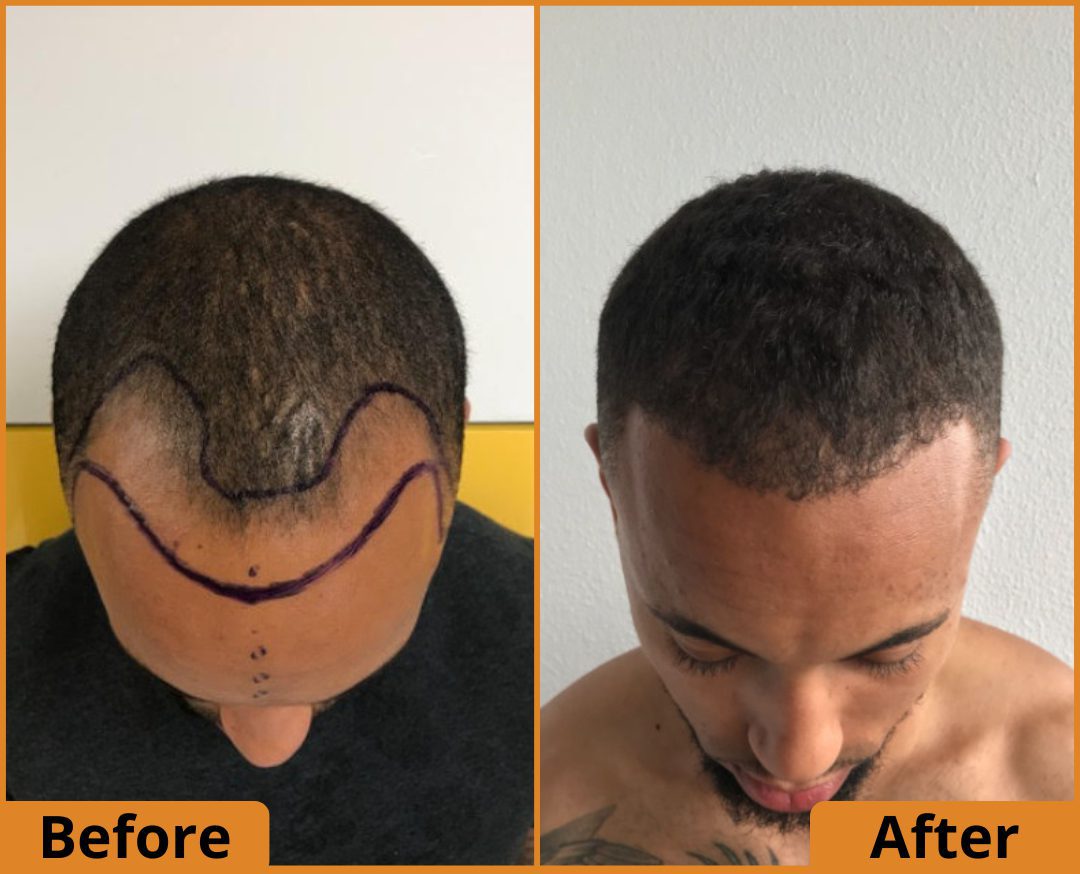
- Reframing the face with a natural hairline
- Improving density in key visible areas
This type of approach can still deliver meaningful improvement, even with limited donor hair.
Why Expectations Need to Be Adjusted
When considering an FUE hair transplant with a weak donor area, expectations must be realistic.
You may not achieve:
- Full coverage across the entire scalp
- High density in all areas
However, you can still achieve:
- A natural-looking improvement
- Better framing of the face
- A more balanced appearance
Understanding this difference is key to being a suitable candidate.
What Results Can You Expect with a Weak Donor Area?
If you have an FUE hair transplant with a weak donor area, the results will depend on how the available grafts are used.
In most cases, the focus is on:
- Creating natural-looking coverage
- Improving the appearance of key areas
- Using grafts efficiently
Rather than aiming for full density, the goal is to achieve a result that looks balanced and proportionate.
Coverage vs Density with Limited Donor Hair
When donor hair is limited, there is a trade-off between coverage and density.
- Coverage refers to how much of the scalp is filled
- Density refers to how thick the hair appears
With a weak donor area:
- Wider coverage may reduce density
- Higher density may limit how much area can be treated
A well-planned FUE hair transplant balances these two factors to create the best possible visual result.
Focusing on High-Impact Areas
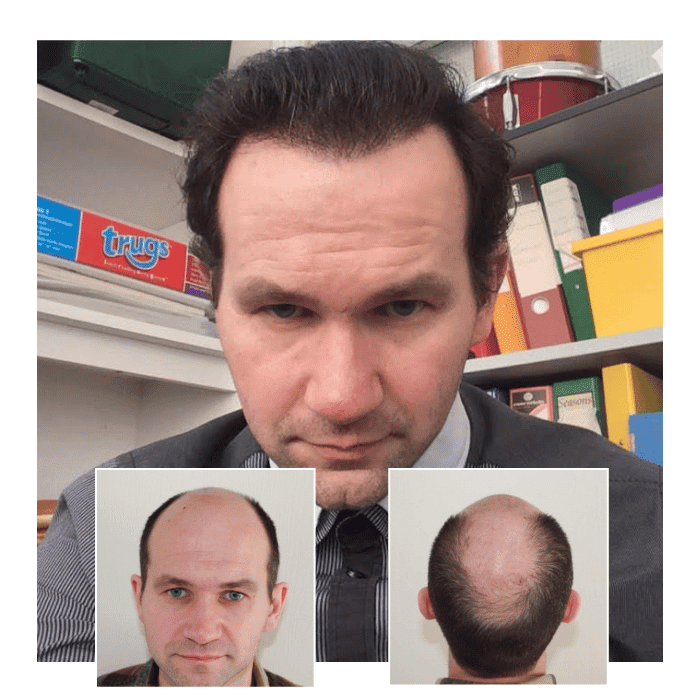
In many cases, the most effective approach is to focus on areas that have the greatest visual impact.
These typically include:
- The hairline
- The frontal third of the scalp
Improving these areas can:
- Frame the face
- Create the appearance of fuller hair
- Deliver noticeable results with fewer grafts
The crown is often treated as a lower priority when donor hair is limited.
Will the Result Look Thin?
A common concern is whether results will look thin with a weak donor area.
When performed correctly:
- The result should look natural
- Density may be lower, but still visually effective
- Hair should blend with existing hair
Factors such as hair thickness, colour, and texture play a significant role in how dense the result appears.
Limitations of FUE with a Weak Donor Area
There are some limitations to consider when donor area quality is lower.
These include:
Limited Graft Availability
A weak donor area means fewer grafts are available for transplantation.
This can limit:
- The total area that can be treated
- The level of density that can be achieved
Reduced Flexibility for Future Procedures
Because the donor area must be preserved:
- There may be fewer options for additional treatments
- Planning must consider long-term use of grafts
Greater Importance of Technique
When grafts are limited, technique becomes even more important.
This includes:
- Precise extraction
- Strategic placement
- Careful hairline design
A well-executed plan ensures that each graft contributes to the final result.
A weak donor area does not mean a transplant is off the table, but it does mean the plan needs to be more focused. The goal becomes achieving the best possible result with the grafts available.
Darryl King – Capital Hair Restoration – Hair Consultant
Why Conservative Planning Is Essential

With a weak donor area, a conservative approach is often the best option.
This means:
- Avoiding over-harvesting
- Prioritising natural appearance
- Planning for long-term hair loss
At Capital Hair Restoration, donor management is central to every FUE hair transplant, particularly in cases where donor supply is limited.
Can Results Still Be Worthwhile?
Even with a weak donor area, an FUE hair transplant can still provide meaningful improvement.
For many patients:
- Restoring the hairline improves confidence
- Even modest density changes the overall appearance
- A natural result is more important than maximum coverage
The key is to approach treatment with realistic expectations and a clear plan.
What Are the Alternatives If Your Donor Area Is Weak?
If an FUE hair transplant is not the best option due to a weak donor area, there are still alternative approaches to consider.
In some cases, combining treatments or adjusting the strategy can improve results.
FUT (Strip Method)
In certain situations, FUT may be considered as an alternative.
FUT involves removing a strip of scalp from the donor area and dissecting it into grafts.
Compared to FUE:
- It can yield a higher number of grafts in some cases
- It may be more suitable for patients with limited donor density
- It leaves a linear scar rather than small dot scars
This option is not suitable for everyone, but it can be useful where maximising graft yield is important.
Beard or Body Hair Transplant (BHT)
In some cases, hair from other parts of the body can be used.
This includes:
- Beard hair
- Chest or body hair
These grafts can be used to:
- Add density
- Support coverage in certain areas
However:
- Hair characteristics may differ from scalp hair
- Results may vary
- This is usually used as a supplementary option rather than a primary solution

Non-Surgical Treatments
If surgery is not suitable, non-surgical treatments can help manage hair loss.
These may include:
- Medications such as finasteride or minoxidil
- PRP therapy
- Low-level laser therapy
While these do not replace lost hair permanently, they can:
- Slow progression
- Improve existing hair
- Enhance overall appearance
In cases with limited donor hair, success is about prioritisation. Focusing on high-impact areas like the hairline can still deliver a noticeable and natural improvement.
Steven Ambrose – Capital Hair Restoration – Hair Consultant
Can You Improve a Weak Donor Area?
While you cannot increase the number of follicles in the donor area, you can improve overall hair quality.
This can make a difference to how results appear after an FUE hair transplant.
Optimising Hair Health
Improving general hair health can support better outcomes.
This includes:
- Maintaining a balanced diet
- Supporting scalp health
- Following medical advice where appropriate
Stronger, healthier hair can improve visual density, even if graft numbers are limited.
Stabilising Hair Loss
If hair loss is ongoing, stabilising it is important.
This helps:
- Preserve the donor area
- Protect existing hair
- Improve long-term results
Medical treatments may be recommended as part of this process.
Combining Treatments
In some cases, combining treatments can produce better results.
For example:
- A conservative FUE procedure for the hairline
- Followed by non-surgical treatments to maintain density
This approach allows for a more balanced and sustainable outcome.
When Should You Avoid a FUE Hair Transplant?
There are situations where an FUE hair transplant may not be recommended.
These include:
- Severely limited donor area
- Unrealistic expectations
- Medical conditions affecting healing or hair growth
In these cases, proceeding with surgery may lead to poor results.
A responsible clinic will always prioritise long-term outcomes over short-term solutions.
Why Advice Matters
When dealing with a weak donor area, honest assessment is essential.
A reputable clinic will:
- Clearly explain what is achievable
- Recommend alternatives if needed
- Avoid over-promising results
At Capital Hair Restoration, suitability is always assessed carefully to ensure that any treatment offered is in the best interest of the patient.
Is an FUE Hair Transplant Still Worth It with a Weak Donor Area?
In the right circumstances, an FUE hair transplant can still be worthwhile even with a weak donor area.
The key is understanding what can realistically be achieved.
If approached correctly:
- Results can look natural
- Key areas can be improved
- Overall appearance can be enhanced
Even modest changes, particularly to the hairline, can have a significant impact on how your hair looks.
What Matters Most: Planning, Not Just Grafts
When donor hair is limited, planning becomes more important than graft numbers.
A successful outcome depends on:
- Strategic use of available grafts
- Careful hairline design
- Long-term thinking about hair loss progression
Using grafts efficiently can create a strong visual result without needing maximum density.
The key is protecting the donor area while using grafts efficiently. A conservative, well-planned approach ensures the result looks natural both now and in the future.
Darryl King – Capital Hair Restoration – Hair Consultant
Why Choosing the Right Clinic Is Critical
The outcome of an FUE hair transplant with a weak donor area depends heavily on the clinic.
An experienced team will:
- Assess donor area quality accurately
- Avoid over-harvesting
- Recommend the most appropriate treatment plan
At Capital Hair Restoration, donor management is a central part of every procedure, ensuring that results remain natural and sustainable over time.

Frequently Asked Questions About FUE Hair Transplants and Weak Donor Areas
Can you have an FUE hair transplant with a weak donor area?
Yes, in many cases you can still have an FUE hair transplant with a weak donor area. However, the treatment plan may need to be adjusted to work within the limits of your available donor hair. Rather than aiming for maximum coverage, the focus is often on creating a natural-looking result in key areas such as the hairline and frontal scalp.
What is considered a weak donor area?
A weak donor area is one where hair density, hair thickness, or overall follicle quality is lower than ideal. This means there are fewer grafts available for transplantation and greater care is required to avoid visible thinning in the donor region after extraction.
How do clinics assess donor area strength?
During a consultation, the donor area is assessed for density, hair calibre, scalp characteristics, and overall hair quality. Specialists will evaluate how many grafts can be safely extracted while maintaining a natural appearance at the back and sides of the scalp.
Can a weak donor area improve over time?
While it is not possible to create new donor follicles naturally, improving hair health may enhance the appearance and quality of existing hair. In some cases, treatments such as finasteride, minoxidil, PRP therapy, or lifestyle changes can help preserve and strengthen existing hair.
How many grafts can be taken from a weak donor area?
The number varies significantly between individuals. A strong donor area may provide several thousand grafts, while a weaker donor area may only safely support a more conservative extraction. A detailed assessment is required to determine what is achievable without over-harvesting.
What happens if too many grafts are taken from a weak donor area?
Over-harvesting can lead to visible thinning, patchiness, and an unnatural appearance in the donor area. It may also reduce the possibility of future procedures. This is why experienced donor management is essential when planning an FUE hair transplant.
Is FUT better than FUE for patients with a weak donor area?
In some cases, FUT may allow a surgeon to obtain more grafts from a limited donor area compared to FUE. However, FUT involves a linear scar and is not suitable for everyone. The most appropriate option depends on your hair characteristics, donor density, and treatment goals.
Can beard hair be used if my donor area is weak?
Yes, beard hair can sometimes be used as a supplementary donor source. Beard grafts are often thicker than scalp hair and can be useful for adding density. However, they are usually combined with scalp grafts rather than used as the sole donor source.
Will my results look thin if I have a weak donor area?
Not necessarily. While density may be lower than someone with a very strong donor area, strategic graft placement can still produce a natural-looking result. Hair thickness, colour contrast, curl, and styling all influence how dense the final result appears.
Should I avoid a hair transplant if I have extensive hair loss and a weak donor area?
Not always, but expectations must be realistic. Patients with advanced hair loss and limited donor supply may benefit from a more conservative approach, alternative treatments, or a combination of surgical and non-surgical options. A thorough consultation is essential to determine suitability.
Can non-surgical treatments help if I am not suitable for an FUE hair transplant?
Yes. Treatments such as finasteride, minoxidil, PRP therapy, and low-level laser therapy may help slow hair loss, improve hair quality, and maintain existing density. These treatments are often recommended alongside or instead of surgery when donor hair is limited.
How do I know if my donor area is strong enough for a hair transplant?
The only reliable way to determine donor area suitability is through a professional assessment. An experienced hair transplant specialist can evaluate your donor density, hair characteristics, and long-term hair loss pattern to recommend the most appropriate treatment plan.
Your Next Step
Having a weak donor area does not automatically mean a hair transplant is impossible. What matters most is understanding the quality of your donor hair, setting realistic expectations, and creating a treatment plan that uses your available grafts as effectively as possible.
At Capital Hair Restoration, we take a conservative, long-term approach to donor management. Rather than focusing solely on graft numbers, we focus on achieving natural-looking results while preserving donor hair for the future.
During your consultation, we will:
- Assess the strength and density of your donor area
- Evaluate your suitability for FUE, FUT, or alternative treatments
- Discuss realistic coverage and density expectations
- Show real patient results from similar cases
- Create a personalised treatment plan designed around your long-term goals
Consultations are available across the UK, including Harley Street, London, Chelmsford, Brentwood, Cambridge, Guildford, Reading, Watford, and Brighton.
Even when donor hair is limited, carefully planned treatment can often deliver meaningful improvements to your hairline, overall appearance, and confidence. The key is knowing what is realistically achievable and choosing an approach that protects your long-term results.
Book your free hair transplant consultation today and discover what options may be available based on your donor area, hair loss pattern, and treatment goals.


Book Your Free Hair Transplant Consultation
Fill in your details and we'll get in touch with you shortly.