


When Can You Exercise After a Hair Transplant? Recovery Timeline, Gym and Run
When Can You Exercise After a Hair Transplant? Recovery Timeline, Gym and Run

When Can You Exercise After a Hair Transplant?
A common question after surgery is: when can you exercise after a hair transplant?
If you are wondering when you can exercise after a hair transplant, or when it is safe to return to the gym, running, or weightlifting, timing is key. Exercising too soon after surgery can affect healing and increase the risk of damaging newly implanted grafts.
Returning to the gym, running, or playing sports is an important part of many people’s routine. However, after a hair transplant, timing matters. Exercising too soon can affect healing, increase the risk of complications, and potentially impact the success of the transplanted grafts.
Most patients can return to light activity after 7 to 10 days, with a gradual return to the gym, running, and weightlifting after 2 to 4 weeks. Strenuous exercise should be avoided in the first week to protect newly transplanted grafts and support proper healing.
Understanding when and how to return to exercise is a key part of proper aftercare. With the right approach, you can protect your results while safely getting back to your normal routine.
Why You Need to Avoid Exercise After a Hair Transplant
In the days following a hair transplant, the newly implanted grafts are still settling into the scalp. During this early stage, they are delicate and can be affected by external factors such as pressure, friction, and increased blood flow.
This is why exercise after a hair transplant needs to be carefully managed in the early stages.
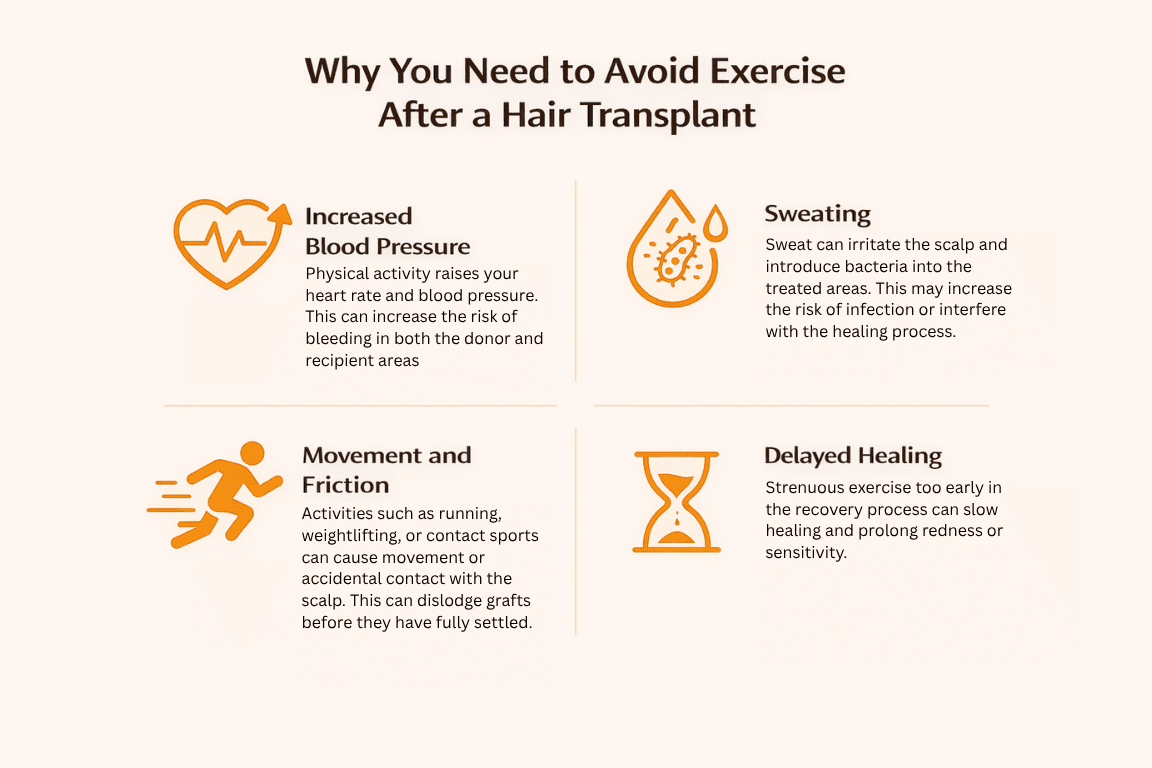
Exercise can interfere with this process in several ways.
Increased blood pressure
Physical activity raises your heart rate and blood pressure. This can increase the risk of bleeding in both the donor and recipient areas, particularly in the first few days after surgery.
Sweating
Sweat can irritate the scalp and introduce bacteria into the treated areas. This may increase the risk of infection or interfere with the healing process.
Movement and friction
Activities such as running, weightlifting, or contact sports can cause movement or accidental contact with the scalp. This can dislodge grafts before they have fully settled.
Delayed healing
Strenuous exercise too early in the recovery process can slow healing and prolong redness or sensitivity.
For these reasons, it is important to follow a structured timeline when returning to exercise.
At Capital Hair Restoration, we advise patients to prioritise healing in the first few weeks. Protecting the grafts early on helps ensure the best possible long-term result.
Darryl King, Capital Hair Restoration – Hair Consultant
How Long After a Hair Transplant Can You Exercise safely?
The exact timeline for returning to exercise depends on the stage of recovery.
In general, most patients are advised to avoid all forms of exercise for at least the first 7 to 10 days after a hair transplant. During this period, the grafts are still securing themselves in the scalp, and any disruption can affect their survival.
After this initial phase, activity can gradually be reintroduced. However, not all types of exercise can be resumed at the same time.
Light activity, such as walking, may be allowed earlier, while more intense exercise, including running, weightlifting, or sports, usually requires a longer waiting period.
The key is to increase activity gradually, allowing the scalp to heal fully before returning to more demanding training.
Exercise After Hair Transplant: A Recovery Timeline
To make this clearer, it helps to break recovery down into stages. Each stage has different guidelines depending on how secure the grafts are and how well the scalp has healed. Following a clear hair transplant recovery timeline for exercise helps reduce risk and ensures the best results.
The following sections outline when you can safely return to different types of exercise, including cardio, gym workouts, and sports.
Exercise After Hair Transplant: Recovery Timeline
Returning to exercise after a hair transplant should be done gradually, following a structured timeline. This helps protect the grafts during the early stages of healing while allowing you to ease back into your routine safely.
Days 1 to 7: No exercise
During the first week after your hair transplant, you should avoid all forms of exercise.
This is the most critical phase of healing. The transplanted grafts are still settling into the scalp and are not yet fully secure. Any increase in blood pressure, sweating, or movement can increase the risk of bleeding, irritation, or graft displacement.
Even light activities such as brisk walking should be kept to a minimum. The focus during this stage should be on rest and following aftercare instructions closely.
Days 7 to 10: Light activity only
After the first week, the grafts begin to stabilise, but caution is still required.
At this stage, light activity such as gentle walking may be introduced. However, anything that raises your heart rate significantly or causes sweating should still be avoided.
You should continue to avoid:
- Running
- Gym workouts
- Weightlifting
- Any activity involving bending or straining
The goal is to reintroduce movement without putting stress on the scalp.
Week 2: Gradual return to light exercise
By the second week, most grafts are securely anchored in place.
At this point, you can begin to reintroduce light cardiovascular activity, such as:
- Walking at a moderate pace
- Light cycling
- Low-intensity cardio
However, you should still avoid intense workouts and anything that involves heavy lifting or excessive sweating.
It is important to listen to your body during this stage. If you notice discomfort, redness, or irritation, it is best to reduce activity and allow more time for recovery.
Weeks 3 to 4: Return to normal exercise
Around three to four weeks after the procedure, most patients can return to their normal exercise routine.
This includes:
- Running
- Gym workouts
- Weightlifting
- Higher-intensity cardio
By this stage, the scalp has healed sufficiently, and the risk of damaging the grafts is significantly reduced.
However, contact sports or activities where there is a risk of direct impact to the scalp may still require additional caution.
Your Next Step
For many patients, returning to the gym, running, or sport is one of the biggest concerns after a hair transplant. While the recovery period is relatively short, understanding when and how to resume exercise is essential for protecting your grafts and achieving the best possible result.
At Capital Hair Restoration, every patient receives detailed aftercare guidance tailored to their lifestyle and activity levels. Whether you are a recreational gym-goer, a regular runner, or a competitive athlete, we can help you plan your recovery safely and confidently.
During your consultation, we will:
- Assess your hair loss and donor area
- Explain the full recovery timeline
- Discuss when you can safely return to exercise and sport
- Provide personalised aftercare advice based on your routine
- Create a treatment and recovery plan tailored to your goals
Consultations are available across the UK, including Harley Street, London, Chelmsford, Cambridge, Guildford, Reading, Watford, Portsmouth, and Southampton.
The first few weeks after a hair transplant require patience, but protecting your grafts during this period can make a significant difference to your final result. With the right aftercare and a gradual return to activity, most patients can resume their normal training routine while giving their new hair the best possible chance of success.
Book your free hair transplant consultation today and discover how treatment, recovery, and aftercare can be planned around your fitness goals, training schedule, and lifestyle.
Hair Transplant Exercise FAQs
How long should I wait before exercising after a hair transplant?
Most patients should wait at least 7 to 10 days before light exercise and 2 to 4 weeks before returning to intense workouts.
Can I go to the gym after a hair transplant?
Yes, but not immediately. Light gym activity can begin after around 2 weeks, with full workouts after 3 to 4 weeks.
Can sweating affect a hair transplant?
Yes. Excessive sweating early on can irritate the scalp and increase infection risk.
Can exercise dislodge hair grafts?
Yes, especially in the first week. Movement, pressure, or increased blood flow can affect graft stability.
When can I run after a hair transplant?
Light running is usually safe after 2 to 3 weeks, depending on healing progress.


Book Your Free Hair Transplant Consultation
Fill in your details and we'll get in touch with you shortly.